

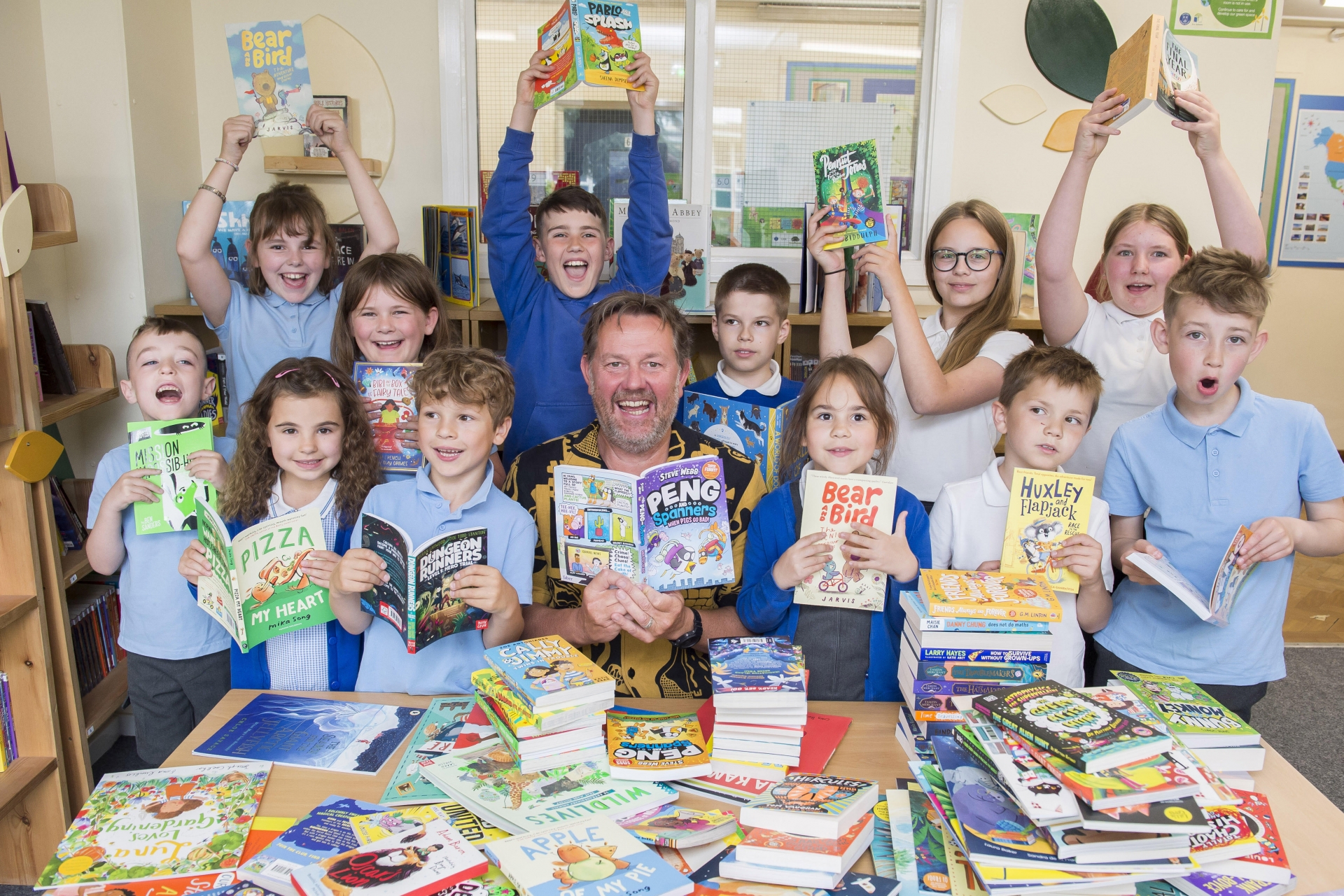
Children’s literacy charity Bookmark Reading Charity has today launched “Mind The Gap”, a national campaign calling for urgent action to close England’s “literacy gap” – the discrepancy in reading attainment between disadvantaged children and their peers.
Only 10% of disadvantaged children who fall behind in reading at primary school go on to pass English and maths at GCSE[1]. The charity aims to raise awareness of this issue and to mobilise the public to help close the gap, through volunteering to read one-to-one with a child who’s falling behind.
The campaign is supported by a host of influential figures across literature, broadcasting, and entertainment, including Alex Jones, best known for hosting The One Show, CBBC’s Ben Cajee, Waterloo Road actress Tillie Amartey, and best-selling authors Hannah Gold, Chris Smith, and Sathnam Sanghera, reflecting a shared commitment to improving literacy levels among disadvantaged children in England.


Hero findings
To kick off the campaign, timed to coincide with the government-backed National Year of Reading, Bookmark Reading Charity commissioned OnePoll to conduct a national survey of 2,000 adults. The survey explored public awareness of the ‘literacy gap’ and measured how likely people are to take action to help close it.
Results reveal:
59% of adults do not know that 1 in 4 children[2] leave primary school unable to read well, and disadvantaged children are disproportionately affected.
Just 33% are aware that 1 in 8 children[3] aged 5 – 8 years old don’t own a book at home.
96% believe reading for pleasure is essential; and 94% agree that the literacy gap deserves far more national attention.
45% said they were likely to take action to help close this gap, such as volunteering to read one-to-one with a child who is falling behind.
42% of respondents cited lack of time as their main reason for not volunteering.
The literacy gap: a widening divide
The survey pinpoints that while there is a strong belief in the importance of reading for pleasure nationally, there is a general lack of awareness of the scale of the literacy crisis and the struggles that some children face. This gap is not simply about reading ability; it is about a child’s future opportunities, confidence, health, and long-term life chances. Poor literacy is linked to a 26-year gap in life expectancy[4] between the most and least vulnerable communities.
The discrepancy between awareness versus action is also marked, with nearly every person surveyed believing that the “literacy gap” is an important issue (94%) versus those who are willing to give up their time to support children in need (45%).
In schools, budget cuts are at their highest levels since 2017, with 76% of primary leaders reporting reductions to teaching assistant budgets in 2025[5]. In addition, one in seven primary schools lacks a library, rising to one in six in disadvantaged areas.[6]
Emily Jack, CEO of Bookmark Reading Charity said:
“These results show that while the public cares deeply about literacy, there’s still a huge gap in understanding - and in action.
The literacy gap isn’t just about reading; it’s about opportunity, wellbeing and social equality. The more people understand the issue, the more we can all do to close it. Through our “Mind The Gap” campaign we want to mobilise the public to help us reduce the gap between disadvantaged children and their peers, through volunteering with Bookmark Reading Charity. Finding just one hour a week to ignite the joy of reading can change the course of a child’s future.”
Broadcaster Alex Jones adds:
"There’s something amazing about watching a child get excited over a story for the first time. Spending that time reading together feels small, but it actually has a huge impact; it helps them imagine, learn, and feel confident. If we all gave up just one hour per week to help a child struggling with their reading, I think the future of our next generation would look quite different.”
A national call to action
The “Mind The Gap” campaign highlights a simple, practical solution: more adults volunteering to support children who are falling behind in reading. While 94% agree addressing the literacy gap is “important,” far fewer feel confident knowing how to help; highlighting the need to raise awareness of how willing members of the public can support those who need it most.
Bookmark Reading Charity’s call to action is clear: “We cannot close the literacy gap without public involvement”, says Emily Jack. Bookmark’s One-to-one Reading Programme relies on volunteers to support children in primary schools who are falling behind. The programme provides each child with two, 30-minute sessions, twice per week, with volunteers mostly online, making it easy for volunteers to complete sessions from anywhere. The results of this programme speak for themselves: Last academic year, 86% of teachers noticed an increase in children’s reading skills; 79% of teachers noticed an increase in reading motivation; and 73% of teachers noticed children reading more often. Nearly every child (94%) who has taken part in one of Bookmark’s programmes has progressed at or above the rate expected for their age; showing the difference that the charity’s interventions make to children’s reading levels.[7]
To meet the current demand from partner schools, Bookmark Reading Charity needs to increase its active volunteer base by 25%. Bookmark hopes that “Mind The Gap” will motivate more volunteers to step forward and give a child the reading support they need to continue on their literacy journey; and improve their life chances.
Bookmark Reading Charity is asking the public to sign up to volunteer at bookmarkreading.org/closethegap
‘Reading role models’ are key to closing literacy gap, experts say
The findings, shared at Bookmark Reading Charity’s Mind The Gap impact panel event, hosted by broadcaster Alex Jones (The One Show), show that while parents overwhelmingly recognise the importance of reading, competing demands on family time are preventing many children from developing strong reading habits.
Panelist Emily Jack, CEO of Bookmark Reading Charity, said at the event: “Our survey highlights how much we need to strengthen reading role models at home. Children learn by example, and seeing trusted adults enjoy reading can spark a love of stories and reading for pleasure. Our incredible volunteers provide that vital encouragement, becoming positive role models who help children believe in themselves and discover the joy of reading.”
Host Alex Jones, agreed: “There are time pressures, people have jobs. Often, by the end of the day children are shattered. But when they find a book that they love and go off and read on their own, that fills me with joy. (In our household) My husband does the bedtime reading in the week and I do it at the weekend, and we love it.”
The panel shared that reading at home plays a decisive role in shaping children’s long- term literacy and enjoyment of books.
Panelist Alison David, Consumer Insight Director at HarperCollins Children’s Books and Farshore, said: “We know that when children are read to frequently, they are much more likely to read themselves. When 8 – 11 years are read to less than weekly, 20% read daily. When read to daily, 60% choose to read daily themselves 2 . A lot of parents think that getting the school reading homework done is more important than the bedtime story. It’s two sides of the same coin. I like to think of it as the ‘skill’ and the ‘will’, we need to encourage both.”
Comments (0)
Leave A Reply
You must be logged in to post a comment.