Browse Historical audiobooks, listen to samples and when you're ready head over to Audiobooks.com where you can get 3 FREE audiobooks on us
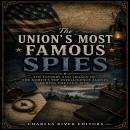
"Americans have long been fascinated by the Civil War, marveling at the size of the battles, the leadership of the generals, and the courage of the soldiers. Since the war's start over 150 years ago, the battles have been subjected to endless debate among historians and the generals themselves. The Civil War was the deadliest conflict in American history, and had the two sides realized it would take four years and inflict over a million casualties, it might not have been fought. Since it did, however, historians and history buffs alike have been studying and analyzing the biggest battles ever since. In September 1862, the Union had no intelligence service worthy of the name. It had detectives, scouts, scattered networks of informants, balloons, signal flags, and a great deal of luck, but the federal government did not have a coordinated system, to the extent that military commanders did not know enemy troop strength. In fact, General George McClellan spent most of his time in command of the Army of the Potomac dramatically overestimating the size of Robert E. Lee's Confederate army in front of him, and it would inform how he fought at Antietam on September 17, 1862. At that battle, McClellan believed Lee outnumbered him because his intelligence chief, Allan Pinkerton, had told him so. By the end of the war, the Union would be running the most sophisticated intelligence operations in American history to that point. The government eventually forged an integrated, all-source, professional service that fed the commanding generals daily reports on enemy strength, disposition, morale, and intent. The Union also successfully maintained a network of spies inside the Confederate capital that intercepted enemy signal traffic; read Southern newspapers for what the editors had let slip, and used escaped slaves as sources of intelligence and treated their testimony as it deserved to be treated."
Charles River Editors (Author), Peter Larson (Narrator)
Audiobook
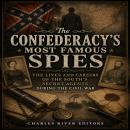
"Though espionage is a hallmark of every major war, spies are often depicted in countless works of fiction as discovering secrets on which the fate of nations hang in the balance. Reality is generally rather more mundane, as spies often gather low-level intelligence that only makes sense when it is examined by analysts and compared to information from other sources. Espionage provides clues to what the enemy is planning, but on its own, it rarely changes the course of a war. Moreover, real spies are generally anonymous, not the bold, swashbuckling action heroes depicted in fiction. Spies must hide in plain sight, and that is best achieved by being as innocuous as possible. The most effective Union spy of the war was a Richmond spinster named Elizabeth Van Lew, who ran one of the most successful espionage networks from a mansion on Church Hill in the heart of the Confederate capital. She communicated directly with Ulysses Grant, and she smuggled intelligence out of Libby Prison using methods so varied and inventive that the Confederate authorities who suspected her never fully figured out how she was accomplishing it. She recruited a woman she had freed from enslavement to serve as a domestic servant in Jefferson Davis' own household, placing an observer at the nerve center of Confederate executive decision-making. She maintained these operations for four years under constant suspicion, in a city that had come to despise her, without ever being successfully indicted for the treason that every Confederate official in Richmond assumed she was committing. Van Lew’s story does not fit neatly into the categories that popular histories of Civil War espionage tend to favor. She simply started the war as a middle-aged woman who had inherited considerable wealth and unshakable convictions when it came to the necessity of abolishing slavery, and before the war had even started, she had made the conscious decision to do everything within her power to defeat the Confederacy."
Charles River Editors (Author), Michelle Humphries (Narrator)
Audiobook
Pauline Cushman: The Life of the Southern Actress Who Became a Union Spy during the Civil War
"Given the necessity of spies to hide in plain sight, on some level it is perfectly sensible that women played a larger and more decisive role in espionage operations, because during the Civil War, women were not taken seriously as threats. They openly moved through areas that men in uniform could not easily penetrate, and they were able to publicly receive callers, visit prisoners, manage households, carry on the ordinary commerce of social life, and cross lines that military authorities maintained without bringing any attention upon themselves. Ironically, both sides used several women as spies precisely because they drew less suspicion, yet neither the Union nor Confederates took potential women spies seriously. In some ways, Pauline Cushman was able to take advantage of the fact she was a woman, but unlike regular civilians who could blend in, she had the disadvantage of being a recognizable actress. Near the end of the war, she was photographed by Matthew Brady, who had documented the Civil War's battlefields, generals, and, most memorably, casualties. In the photograph, Cushman is wearing a military uniform with a sword at her side, and her gaze is fixed beyond the frame with the composed confidence of someone who had seen worse things than a camera. She was 31 at the time and had recently been sentenced to hang. By the time Brady pointed his lens at her, she was famous as the “Spy of the Cumberland,” making her the greatest heroine of the year. Major Cushman was a woman whose story was being told in newspapers from Boston to San Francisco with the breathless enthusiasm of a nation that needed heroes and found in her something it could not quite categorize. She had done a soldier's work, faced a soldier's death, and survived to tell. However, Cushman’s story was not just about being a spy, but also about what it cost to be a woman who wanted to be of use to her country in a time when her country had no official way to acknowledge her contribution."
Charles River Editors (Author), Michelle Humphries (Narrator)
Audiobook
"Given the necessity of spies to hide in plain sight, on some level it is perfectly sensible that women played a larger and more decisive role in espionage operations, because during the Civil War, women were not taken seriously as threats. They openly moved through areas that men in uniform could not easily penetrate, and they were able to publicly receive callers, visit prisoners, manage households, carry on the ordinary commerce of social life, and cross lines that military authorities maintained without bringing any attention upon themselves. A woman bringing food and medicine to prisoners seemed to be a humanitarian, not a security concern, and a woman maintaining the social routines of an established household was a hostess, not an intelligence coordinator. Ironically, both sides used several women as spies precisely because they drew less suspicion, yet neither the Union nor Confederates took potential women spies seriously enough. At the start of the war, the most formidable of these women on either side of the conflict was a Washington widow named Rose O'Neal Greenhow. She was perfectly situated for espionage as a politically connected woman of extraordinary intelligence who had social reach and the desire to use every connection she had on behalf of a cause she believed in absolutely. In the first year of the war alone, she helped win a battle, ran a spy ring from inside her own house while under house arrest, and charmed her jailers in ways that allowed her to continue to pass intelligence from prison. She was exiled to the Confederacy rather than tried, because the government that arrested her recognized, rightly, that trying her in open court would be an embarrassment. She lobbied Jefferson Davis directly, and then she crossed the Atlantic and met Napoleon III and Queen Victoria as an unofficial Confederate envoy. She published a memoir in London that sold thousands of copies and made her case to the European audience her government desperately needed."
Charles River Editors (Author), Michelle Humphries (Narrator)
Audiobook
"The Civil War’s most famous spy, the Confederate sympathizer Isabella Maria Boyd, is one of those people in American history who is as much myth as reality. Part of this is because she lived in an era that is still heavily imbued with a sense of nostalgia and myth, but her own personality is also heavily to blame, for she was what might in modern parlance be called a drama queen; since she was known for serial exaggerations in her work, historians are still trying to separate fact from fiction when it comes to her exploits. In the same vein, there was the matter of the people she surrounded herself with, many of whom needed a mythical figure to attach their last fading hopes for a Confederate victory to. They found such a person in Belle Boyd. At the start of the war, the most formidable spy on either side of the conflict was a Washington widow named Rose O'Neal Greenhow. She was perfectly situated for espionage as a politically connected woman of extraordinary intelligence who had social reach and the desire to use every connection she had on behalf of a cause she believed in absolutely. In the first year of the war alone, she helped win a battle, ran a spy ring from inside her own house while under house arrest, and charmed her jailers in ways that allowed her to continue to pass intelligence from prison. The most effective Union spy of the war was a Richmond spinster named Elizabeth Van Lew, who ran one of the most successful espionage networks from a mansion on Church Hill in the heart of the Confederate capital. She communicated directly with Ulysses Grant, and she smuggled intelligence out of Libby Prison using methods so varied and inventive that the Confederate authorities who suspected her never fully figured out how she was accomplishing it. She recruited a woman she had freed from enslavement to serve as a domestic servant in Jefferson Davis' own household, placing an observer at the nerve center of Confederate executive decision-making. "
Charles River Editors (Author), Michelle Humphries (Narrator)
Audiobook
"In September 1862, the Union had no intelligence service worthy of the name. It had detectives, scouts, scattered networks of informants, balloons, signal flags, and a great deal of luck, but the federal government did not have a coordinated system, to the extent that military commanders did not know enemy troop strength. By the end of the war, the Union would be running the most sophisticated intelligence operations in American history to that point, utilizing an integrated, all-source, professional service that fed the commanding generals daily reports on enemy strength, disposition, morale, and intent. Just as importantly, the Union also successfully maintained a network of spies inside the Confederate capital that intercepted enemy signal traffic; read Southern newspapers for what the editors had let slip, and used escaped slaves as sources of intelligence. Remarkably, the spy at the center of the efforts in Richmond was a Southern woman who hailed from the city itself. In some ways, Pauline Cushman was able to take advantage of the fact she was a woman, but unlike regular civilians who could blend in, she had the disadvantage of being a recognizable actress. Near the end of the war, she was photographed by Matthew Brady, who had documented the Civil War's battlefields, generals, and, most memorably, casualties. The photograph was taken after she had been rescued and the nation had learned what she had done behind Confederate lines in the spring and summer of 1863. She was already famous as the “Spy of the Cumberland,” making her the greatest heroine of the year. The story of how the Union Army went from the bumbling improvisation of 1861 to the professional craft of 1865, and back to nothing in 1866, is a story of inflated estimates and accidental discoveries, of slaves who walked into federal lines with maps in their heads, of Richmond spinsters who carried coded messages in hollow eggs, and of New York lawyers who learned on the job how to count the enemy."
Charles River Editors (Author), Michelle Humphries (Narrator)
Audiobook

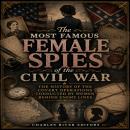
"Given the necessity of spies to hide in plain sight, on some level it is perfectly sensible that women played a larger and more decisive role in espionage operations, because during the Civil War, women were not taken seriously as threats. They openly moved through areas that men in uniform could not easily penetrate, and they were able to publicly receive callers, visit prisoners, manage households, carry on the ordinary commerce of social life, and cross lines that military authorities maintained without bringing any attention upon themselves. A woman bringing food and medicine to prisoners seemed to be a humanitarian, not a security concern, and a woman maintaining the social routines of an established household was a hostess, not an intelligence coordinator. Ironically, both sides used several women as spies precisely because they drew less suspicion. At the start of the war, the most formidable spy on either side of the conflict was a Washington widow named Rose O'Neal Greenhow. She was perfectly situated for espionage as a politically connected woman of extraordinary intelligence who had social reach and the desire to use every connection she had. In the first year of the war alone, she helped win a battle, ran a spy ring from inside her own house while under house arrest, and charmed her jailers in ways that allowed her to continue to pass intelligence from prison. Of course, the most notorious Confederate spy is arguably the most controversial individual of the entire war. John Wilkes Booth was a member of the prominent 19th century Booth theatrical family from Maryland, and he was a well-known actor throughout much of the country by the 1860s. But Booth was also a Confederate sympathizer who dabbled in espionage, and he was increasingly outraged at the Lincoln administration. His early plans to kidnap and ransom President Lincoln, which may have had official Confederate sanction, ultimately gave way to a wide-ranging conspiracy to kill Lincoln."
Charles River Editors (Author), Peter Larson (Narrator)
Audiobook
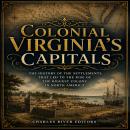
"Jamestown is fondly remembered today for being the first permanent English settlement in the colonies, but it was not fondly remembered by those who lived and died there. The English quickly learned it would be difficult to establish a permanent settlement because of the poor weather, the swampy terrain, the hostile natives living nearby, and the general inexperience and ineptitude of the English settlers. During their first winter, everyone nearly starved, and more than half of the settlers died. By the end of the winter of 1609-1610, known as the “starving time”, barely 10% of the settlers were still alive. Nevertheless, Jamestown is remembered today because the settlement did survive through the hardships and go on to serve as the capital of the English colony for much of the 17th century. At the same time, one of the biggest reasons for its survival and fame today can be attributed to the local Native Americans, particularly Pocahontas, who has added both a human and romanticized, mythological element to Jamestown. Along with Jamestown and Yorktown, Colonial Williamsburg is known today as part of the Historic Triangle of Virginia, but all three of these old Virginian sites are known for vastly different reasons. While Yorktown was the scene of the final climactic battle of the American Revolution and Jamestown is remembered for being the first English settlement to survive in Virginia, Colonial Williamsburg is now best known as a bridge to the past. Williamsburg got its start as a fortified site, which was vitally necessary for English settlers to heavily outnumbered by nearby Native Americans. The site served as the capital of the colony for much of the 18th century, and it bore witness to seminal events in the history of Revolutionary era America. However, once the capital was again moved, Williamsburg lost much of its prominence, and by the end of the 19th century it was best known for hosting the College of William and Mary. "
Charles River Editors (Author), Ross Jenkins (Narrator)
Audiobook
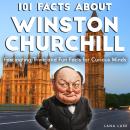
101 Facts About Winston Churchill: Fascinating Trivia and Fun Facts for Curious Minds
"This audiobook is narrated by a digital voice. Looking for an engaging gift for a history enthusiast or a curious mind? Ever wondered about the man who led Britain through its darkest hours and shaped the modern world? Step into the extraordinary life of a legend with 101 Facts About Winston Churchill – Fascinating Trivia and Fun Facts for Curious Minds. This captivating audio collection brings history to life through inspiring stories and remarkable trivia. From his adventurous early military career to his powerful leadership during World War II, this journey covers the full legacy of one of the most influential figures of the modern age. What will you hear inside this audiobook? ✔️ The Early Adventurer: Explore fascinating facts about Churchill’s daring youth, his time as a war correspondent, and the determination that fueled his rise to power. ✔️ The Power of Words: Uncover the secrets behind his legendary wartime speeches and the witty one-liners that made him one of history’s most quotable leaders. ✔️ Interactive Trivia: Challenge yourself with fun questions designed to test your knowledge of Churchill’s greatest achievements. ✔️ A Global Legacy: Learn how his unwavering leadership helped win World War II and shaped the fight for democracy across the globe. This audiobook is the ideal companion for car rides, bedtime, or classroom learning. It’s crafted to be exciting and easy to understand, making the complex world of 20th-century history accessible for young listeners who love stories of courage and leadership. Whether listening solo or sharing the experience with family, you’ll be amazed by the journey of this global icon. Don't wait! Get the audiobook now to start listening and uncover the wisdom and grit of the man who shaped the modern world!"
Lana Luxe (Author), Digital Voice Leo Banks E (Narrator)
Audiobook
[Spanish] - El bosque de los mil farolillos
"Descubre un oscuro retelling de una de las villanas más icónicas de todos los tiempos. ¿Hasta dónde estarías dispuesto a llegar por alcanzar el trono? 'Pagarás cada vez que cojas sangre de un corazón que late'. En un mundo en guerra, las estrellas dicen que Xifeng está destinada a la grandeza. Su futuro es convertirse en la emperatriz de Feng Lu, pero solo si es capaz de convivir con la oscuridad que habita en su interior… Tras dieciocho años bajo las órdenes de su tía, Xifeng vive encerrada en una prisión de pobreza. Pero cuando un trágico suceso le muestra el lado oscuro de su corazón, decide fugarse con Wei (el joven por quien es capaz de saltarse cualquier norma) y perseguir su destino. A pesar de que con ellos viaja también el oscuro secreto oculto detrás de su hermoso rostro; uno sediento de sangre. La belleza y el poder tienen algo en común: no son baratos. ¿Vale la pena ascender al trono cuando el precio a pagar son las personas a las que amas? Espejos, profecías, maldiciones, y un corazón sediento de sangre. Un retelling de la Reina Malvada, una de las villanas más conocidas del mundo, ambientado en una Asia Oriental llega de mitos y leyendas. Una combinación que no te dejará indiferente."
Julie C. Dao (Author), Mariana Almazzi (Narrator)
Audiobook
[German] - Freunde (Ungekürzte Lesung)
"Bewegender Antikriegsroman ab 14 Jahren über Freundschaft und Menschlichkeit. Stell dir vor, es ist Krieg. Du hast alles verloren. Aber du bist nicht allein. Tarek, Tuk, Nata und Ren lernen sich kennen, als sie in den letzten Kriegstagen in die bereits völlig desolate Armee eingezogen werden. Als sie nur mit dem Spaten bewaffnet aufs Schlachtfeld ziehen sollen, desertieren sie. Jeder von ihnen könnte die anderen verraten, aber sie tun es nicht. Jeder hat Unerträgliches erlebt, tief sitzen Scham und Schrecken. So zusammengeschweißt werden sie einander zur Familie. Bis ein Dilemma ihre Verbundenheit in Frage stellt. Kann man den Hass auf ein Volk überwinden, mit dem man im Krieg ist? Kann man lieben, wenn man schlimmste Gewalt erlebt hat? Kann man moralisch bleiben in einer zerstörerischen Welt? Diese Fragen verwebt Eva Kranenburg auf einfühlsame Weise zu einer soghaften Geschichte. Sie erzählt ehrlich bis an die Schmerzgrenze, setzt der Brutalität der Nachkriegswelt jedoch immer auch Licht entgegen: Figuren, die sich einem tief ins Herz schreiben - und ihre unerschütterliche Freundschaft zueinander. Eva Kranenburg ist Psychotherapeutin und hat mit Geflüchteten aus Afghanistan, Syrien, dem ehemaligen Jugoslawien und dem Irak gearbeitet. Sie alle sind auf irgendeine Art in die Erzählung eingeflossen. Für Freunde erhielt sie den Förderpreis der Mitteldeutschen Medienförderung. Fabian Busch erzählt feinfühlig und nuanciert vom Schicksal der vier Jugendlichen, die in den Ruinen eines vergangenen Krieges den Neuanfang versuchen. Meisterhaft gelingt ihm dabei der Spagat zwischen tiefster Erschütterung und hoffnungsvoller Zuversicht. Das Buch wurde ausgezeichnet mit dem Oldenburger Kinder- und Jugendbuchpreis 2025."
Eva Kranenburg (Author), Fabian Busch (Narrator)
Audiobook
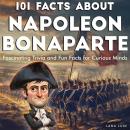
101 Facts About Napoleon Bonaparte: Fascinating Trivia and Fun Facts for Curious Minds
"This audiobook is narrated by a digital voice. Looking for the perfect gift for a history enthusiast? Or perhaps you're just fascinated by the figures who shaped our world. Ever wondered about the man who rose from modest beginnings to become one of the most powerful figures in human history? Welcome to 101 Facts About Napoleon Bonaparte – Fascinating Trivia and Fun Facts for Curious Minds. Step into the legendary life of Napoleon with this exciting audio collection of historical trivia and intriguing stories. From his early days in Corsica to his meteoric rise as Emperor of France, this audiobook takes you on an unforgettable journey through the life of a military genius whose impact is still felt across the globe today. Inside this collection, you will explore: ✔️ The origins of his early life in Corsica and the brilliant strategies behind his rise. ✔️ The legendary clashes, victories, and defeats that redrew the map of Europe. ✔️ The hidden details and engaging trivia about his complex leadership and personal life. ✔️ The lasting impact of a legacy that still influences modern laws and military tactics. Whether you're a student, a young history enthusiast, or just someone curious about the past, this audiobook brings history to life with easy-to-understand facts. It’s the perfect companion for your commute, a workout, or sharing with family. You’ll gain a deeper appreciation for the ambition and strategy of the man who redefined an era. Start your journey into the past today. Download your copy now and uncover the legend!"
Lana Luxe (Author), Digital Voice Leo Banks E (Narrator)
Audiobook
©PTC International Ltd T/A LoveReading is registered in England. Company number: 10193437. VAT number: 270 4538 09. Registered address: 157 Shooters Hill, London, SE18 3HP.
Terms & Conditions | Privacy Policy | Disclaimer