



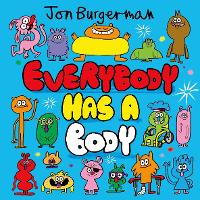


"Books don't just teach children to read. They teach them how to understand themselves, other people and the world around them."
We often talk about the importance of reading because it improves vocabulary, supports learning and helps children succeed at school. Those things are all true. But anyone who has ever watched a child disappear into a brilliant story knows there's something much bigger happening.
Reading changes lives
New research from Oxford University Press (OUP), published as part of the National Year of Reading 2026, shines a light on something many parents, teachers and librarians have instinctively known for years: reading for pleasure doesn't just build literacy - it helps children make sense of their emotions, develop empathy and navigate the challenges of growing up.
To understand the broader impact of reading and its power beyond basic literacy, OUP spoke to more than 3,000 children, aged 7-14, and 200 teachers across the UK.
They then analysed the Oxford Children’s Corpus (OCC) - the world’s largest known database of children’s written language in English, with over 500 million words. The OCC is made up of several smaller corpora, including the Oxford Children’s Reading Corpus, which contains more than 60 million words of text written for children.
For this research, they used insights to better understand the themes and emotions children are regularly exposed to through books. The study found that over four in five children say reading helps them learn new words for feelings and emotions. Seventy per cent say books help them understand why people behave the way they do, while almost six in ten believe something they've read has helped them deal with a real-life situation. These findings resonate deeply with everything we see at LoveReading4Kids.
Every day we recommend books that help children face worries, celebrate differences, understand friendships, cope with grief, build confidence or simply realise they are not alone. Sometimes the greatest gift a story gives a child isn't an answer - it's the reassurance that someone else has felt exactly the same way.
The research also highlights a challenge we've been talking about for some time. While younger children continue to enjoy reading, that enthusiasm declines significantly during the secondary school years. The stories don't necessarily become less important - but many young people become disconnected from reading at precisely the point in their lives when they need it most.
That's why helping children find the right book at the right time matters so much. For one child, it might be an adventure that gives them courage. For another, it might be a funny story that makes them laugh after a difficult day. For someone else, it could be a character experiencing anxiety, loss or friendship struggles that helps them put a name to emotions they couldn't previously explain.
Reading for pleasure has never been about ticking boxes or racing through page counts. It's about connection. Connection to characters, to ideas, to other people's experiences - and ultimately to ourselves.
Top 10 Findings: Why Reading Really Matters
1. Children who read more often gain far more than literacy skills
Seven in ten children read for pleasure every week, but reading frequency drops significantly as children get older. Nearly four in five 7-year-olds read daily or a few times a week, compared with fewer than half of 14-year-olds.
2. A love of reading declines during the secondary years
While 72% of children aged 7–10 say they enjoy reading, this falls to 59% among 11–14-year-olds, highlighting the importance of helping older children stay connected with books.
3. Girls enjoy reading more than boys
Nearly three-quarters of girls say they like or love reading, compared with 58% of boys, suggesting there is still work to do in engaging all young readers.
4. Books help children understand and express their emotions
An impressive 84% of children say reading helps them learn new words for feelings and emotions, while 95% of teachers agree that books expand children's emotional vocabulary.
5. Reading builds empathy
Seven in ten children say books help them understand why people think, feel and behave the way they do, with teachers overwhelmingly agreeing that reading develops perspective-taking and empathy.
6. Stories influence how children treat other people
More than two-thirds of children say reading makes them think about their own behaviour and how they treat others, showing that books shape character as well as knowledge.
7. Books help children navigate real life
Nearly six in ten children believe something they have read has helped them deal with a real-life situation, whether that's friendship problems, bullying, grief or anxiety. Meanwhile, 82% say stories remind them of experiences from their own lives.
8. Adventure, humour and fantasy do more than entertain
Children's favourite genres are funny stories, adventure and fantasy, but these books also introduce complex emotions and difficult topics in ways that feel safe, accessible and engaging.
9. Books expose children to richer emotional language than everyday conversation
Analysis of Oxford's Children's Corpus found that children's books use a far wider range of emotional vocabulary than children typically hear in spoken language, giving them the words to recognise and articulate their feelings.
10. The biggest challenge isn't teaching children to read - it's helping them keep reading
As children grow older, many stop seeing books as relevant to their own lives. The research suggests that helping young people find stories that reflect their experiences and interests is key to maintaining reading for pleasure into adolescence.
At LoveReading4Kids, we've always believed that books are one of the greatest tools we have for helping children grow into kind, confident and curious young people. Research like this doesn't tell us anything we didn't already hope was true - it gives us the evidence to back up what readers, teachers and families witness every single day.
In a world competing harder than ever for children's attention, stories remain one of the few places where young people can slow down, imagine, reflect and truly understand another person's perspective. That isn't just good for literacy. It's good for life.
Our Top Tip for Families
Don't worry about whether your child is reading a "challenging" book. The most important thing is that they're reading something they genuinely enjoy. Whether it's fantasy, football, graphic novels, mysteries, comedy or non-fiction, reading for pleasure is the foundation on which a lifelong love of books is built.
Because when children choose to read, they're doing far more than turning pages - they're building empathy, resilience, confidence and the skills they'll carry with them long after they've closed the book.
Reading Lists
Oxford University Press has curated two lists of books for young people that support the development of emotional understanding and empathy and explore important real-life situations, all while introducing readers to a variety of genres. Check them out in our Reading Lists section here.
Discover book recommendations from Oxford University Press, perfect for sharing with children, and to help nurture a lifelong love of reading.


Comments (0)
Leave A Reply
You must be logged in to post a comment.