

Stories play a central role in how children develop language, imagination and confidence as readers and writers. But not every pupil finds it easy to access learning through text alone, and many teachers are increasingly looking for ways to make stories feel more real, engaging and inclusive.
One approach gaining traction is immersive storytelling. When children step inside a shared narrative world - listening, moving and responding together - stories become something they experience, rather than simply something they read. For pupils who struggle to connect with written texts, including those with SEND, EAL or lower confidence in literacy, this can be transformative. It offers a meaningful, shared experience that they can draw on when speaking, writing and reflecting.

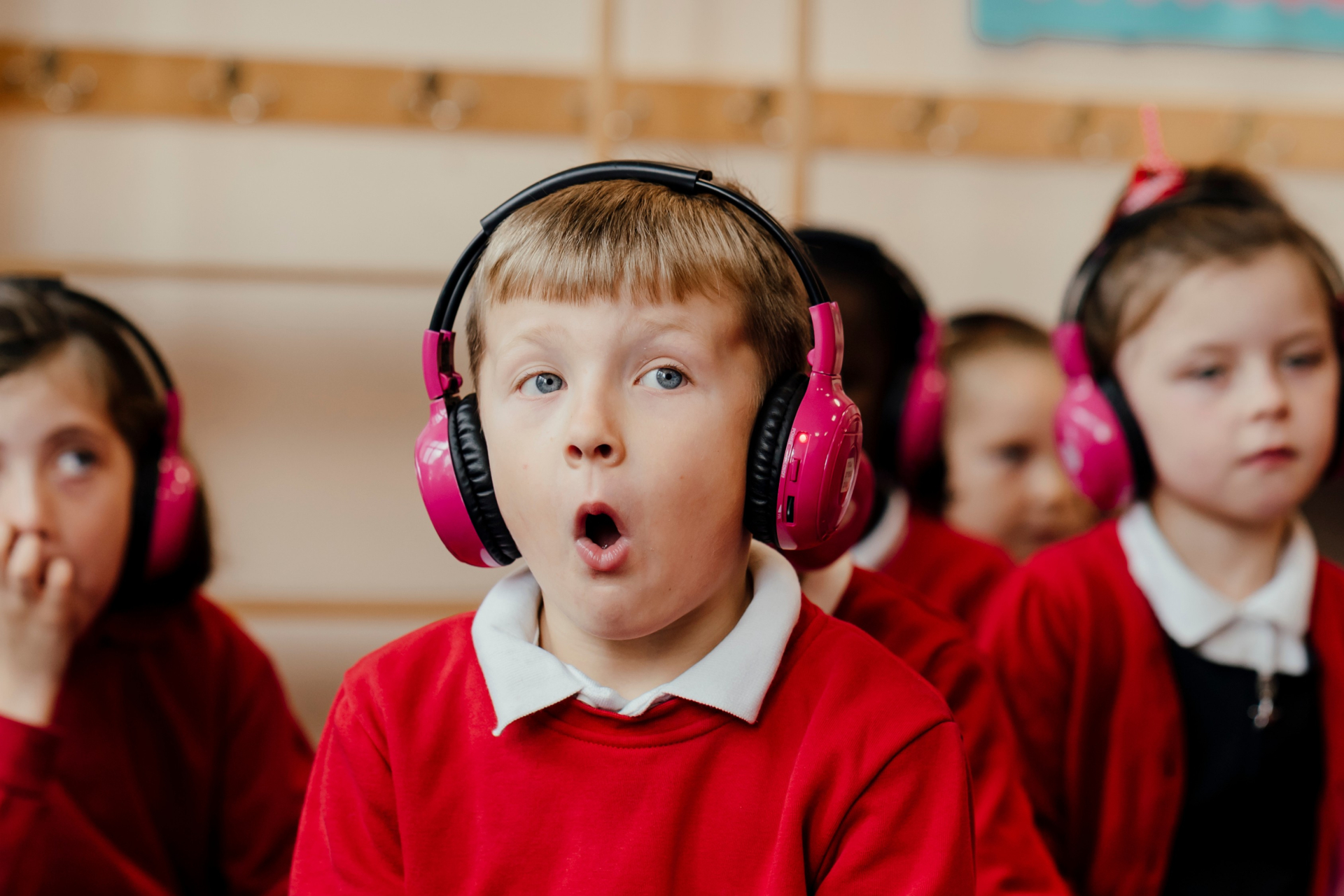
This is the thinking behind now>press>play, which we recently saw in action at the National Literacy Trust Primary Conference. Using wireless headphones, the whole class is transported into an immersive audio experience linked to the curriculum. Pupils become part of the story - taking on roles, making decisions and responding physically and emotionally as the narrative unfolds.
What makes this particularly powerful is that it is a shared experience. Every child has access to the same story, the same moments, the same language. This creates a strong foundation for discussion, reflection and, crucially, writing. And of course inclusion. Teachers often find that pupils who might struggle to engage with a text independently are far more confident when they have lived the story first.
The impact goes beyond engagement. Immersive storytelling can support:
- Vocabulary development, through rich, contextualised language
- Comprehension, as pupils build understanding through experience
- Oracy, with opportunities to discuss and articulate ideas
- Empathy and perspective-taking, as children step into different roles.
 Perhaps most importantly, it nurtures a genuine enjoyment of stories. Something that sits at the heart of reading for pleasure.
As we continue to explore ways to support all children as readers, approaches like this offer a valuable reminder: when learning feels real, children are far more ready to read, speak and write about it.
This kind of immersive, audio-led experience also connects directly to the growing conversation around multimodal reading—the idea that reading today extends beyond print alone. As highlighted in recent literacy research, children increasingly engage with stories through a combination of audio, visual and interactive formats, and this should be recognised as a vital part of developing literacy .
The National Year of Reading 2026
This kind of immersive, audio-led experience also connects directly to the growing conversation around multimodal reading - the idea that reading today extends beyond print alone. As highlighted in recent work from the National Literacy Trust, literacy now encompasses “digital reading, audio storytelling, visual narratives and interactive media”, reflecting how children already engage with stories in their everyday lives.
Within this framework, multimodal reading is not seen as a replacement for traditional literacy, but as a broadening of it - creating what the NLT describes as a more “seamless literacy ecosystem” where different formats work together to support understanding, engagement and identity as a reader.
This aligns closely with the aims of our LoveReading4Kids Year of Reading campaign, which encourages schools to recognise and value multiple ways into reading. Recognising and valuing different formats - whether that's print books, audiobooks, graphic novels or digital texts - helps remove barriers and enables more children to see themselves as readers.
Immersive storytelling experiences like now>press>play sit naturally within this approach. They offer another way into stories - particularly for children who may not yet access narrative confidently through text alone - and can act as a powerful bridge into reading, discussion and writing.
As schools look to re-engage children with reading for pleasure, the message is increasingly clear: there is no single way to be a reader. The more ways we open up stories, the more children we bring in.
To explore how immersive storytelling could support your classroom, visit:

For more on engaging children with reading for pleasure, browse our related content
NLT Publishes The Future of Literacy: Multimodal Reading in the first of a new series
LoveReading4Kids Year of Reading Hub
Diverse Formats & Modern Reading: Valuing Every Route Into Reading
Comments (0)
Leave A Reply
You must be logged in to post a comment.