


What does it mean to feel like the odd one out, and how can stories help children understand, accept and celebrate the differences between us?
In her warm, funny and deeply empathetic books, author and illustrator Rose Robbins explores autism, neurodiversity, disability, communication and belonging with a lightness of touch that makes even complex experiences accessible to young readers. Her latest book, Odd Cat Out, is one of her most personal yet, following Pelly as she navigates the challenges of fitting in at a new school and discovers that friendship does not always happen in the way we expect.
We caught up with Rose to talk about the experiences that inspired Odd Cat Out, why cats make such brilliant characters, growing up with a non-speaking autistic brother, the importance of inclusive schools and creative spaces, and what both children and parents can do to make the transition back to school a little easier.
Q. You’ve spoken openly about being autistic. How did your own experiences shape Odd Cat Out, and how much of yourself do you see in its characters?
A. A huge amount, Odd Cat Out is possibly my most personal book so far (and pretty much all of my books are quite personal!). I based the character Pelly on how I remember myself when I was transitioning between schools. I moved schools a couple of times between the ages of 8 and 12. I always found it hard to mix with groups of other children, and would have loved to have a hiding place like Pelly does in the book! Tangle on the other hand is a patchwork of all the wonderful friends I’ve had who have had the patience to wait for me to open up to them.
 Q. Why did you choose a school full of cats as the setting for Odd Cat Out? (We're guessing you're a cat person!) What is it about cats that makes them such compelling characters?
A. The idea of the school being for cats was actually the seed of the idea for a book, before any of the characters or story. I had wanted to make a story, originally, about a Cat University! But maybe that will come further down the line!
I do adore cats, they are just beautiful and perfect! They have so many funny habits, and each cat is a real individual, perhaps that’s why they make such popular cartoon characters.
Q. Many of your books celebrate difference without making it the only thing that defines a character. Was that a conscious decision, and why do you think that matters?
A. I think defining someone entirely by their difference, be that a disability or any kind of non-conformity, is really reductive and disrespectful to the individual. Stories can be a way of making sense of the world around us, so it makes sense to create fictional characters that have the complexities of real people (even if they are also cats!).
Q. Your books often explore disability and neurodiversity through animal characters and their relationships. Why do you choose animals - cats, dogs, horses and even dragons - rather than children? Do you think that young readers process the fantasy element of these stories in a different way, than if you were using recognisable human faces?
A. I do get this question quite often and I think that honestly it is because I have always preferred to draw animal characters. It isn’t really a conscious choice exactly, I just go with what looks and feels best for the character and story. I like to draw humans though and one day I would like to create a book with human characters.
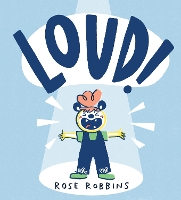
Q. In Loud, Abigail's frustrations with school and feeling misunderstood because of her ADHD are eased by the support of a music teacher. How much of that story was inspired by your time at school? More broadly, do you think schools today provide enough support for children with SEND?
A. I really struggled in school, especially when it came to concentration. I dreaded any lessons where I wouldn’t be allowed to draw or doodle, which is what kept my brain focused. I don’t have an adhd diagnosis, but I really can relate to those experiences. I have also worked a lot in schools and I really admire teachers who can gently engage their students with patience and tolerance, rather than punitive measures and separation. It is a really really hard job, being a teacher! I am in awe of the wonderful teachers and mentors in the world who are making a real difference with misunderstood children. That being said, teachers are not given nearly enough support and training for supporting their SEND pupils, which makes the job even harder. Parents are struggling to get their children to even attend school, as they don’t feel safe there. I believe there needs to be an overhaul of the education system in the UK, to create a more inclusive and safer learning environment for all children and a better support system for parents and teachers.
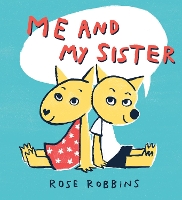
Q. Your first book, Me and My Sister, looks at the highs and lows of life with an autistic sibling - something that many children will identify with. It very cleverly shows the similarities between the two, and the difference. Was it inspired by your own family?
A. Yes, it was, I grew up with a non-speaking autistic brother and we led quite different day to day lives. He was home-educated, while I went to school. He has a lot of dietary needs, while I ate anything I could get my hands on! We have a lot of differences, but at the end of the day we are brother and sister and we love each other.
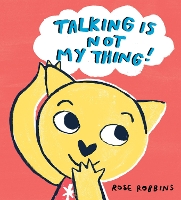
Q. The companian picturebook, Talking Is Not My Thing, gives readers a powerful insight into the rich inner world of a non-verbal sibling, challenging the assumption that being quiet means having nothing to say. Why was it important for you to tell that story?
A. I wanted to give a chance for the sister in the original book to have a voice, to tell the story from her side. I felt it was important as so often the stories of disabled people are told from the perspective of carers and family members. Of course, I myself am not non-speaking, but I did a lot of research and worked collaboratively with individuals who communicate without speech to make sure I wasn’t making any false claims.
Discovering new ways to open up communication between individuals can be life-changing. I remember when my brother first started using symbols, I had given up on hearing him say my name, but seeing him ask for what he needed meant the world to me.
Q. In addition to your publishing, you run inclusive creative workshops in schools and libraries for children and young people include all sorts of interesting crafty, arty things such as puppet-making, animation, and storytelling. Tell us a bit more about the benefits of these classes, and the relationship between Art and SEND.
A. I really enjoy encouraging children to use their imaginations and create things with joy and play. Seeing children surprise each other with their ideas and gain confidence in their own inventiveness is such a great experience. I try to create workshops and events that I would have loved when I was in school, but to also adapt them enough to be enjoyed by children of all abilities, as often tactile activities like art and printmaking are more accessible to children with support needs.
Q. What impact do you hope your books have on young readers? What role do you think stories play in helping children develop empathy and understanding?
A. I hope that my books offer a bit of comfort and validation to children who feel like they don’t quite fit the mold. I have always felt a bit like that, and I’m still learning to accept the way I am, but stories and books have helped me more than anything else.
I hope that my books can help children to recognise that there are all kinds of different people in the world, and that a difference in communication does not mean that there can’t be connection and love.
Q. Towards the end of August families across the country will be preparing to go back to school, and some to start school for the very first time. Do you have any advice for neurodivergent children and their parents who may be anxious?
A. For the children: It takes time to settle into a new environment and routine, there’s no need to rush it. If you are struggling, talk to someone you feel you can trust, a teacher, a friend, a parent, a librarian. If you don’t find your friends straightaway, don’t panic, try a new angle, maybe theirs a club or activity that you could investigate outside of regular classes. I have found some of my oldest friends through our shared interests, so this is a great place to start looking. Also remember, you don’t need friends for the sake of having friends, sometimes having time to yourself is what you need!
For the parents: Be as much of a safe place for your child as you can, school transition is scary for all children but especially neurodivergent ones who will be navigating sensory overload and a new social system (on top of all the academic demands!). Each child and family is different, of course, but being willing to listen with unconditional love will always be a good course of action.
Q. And how can NT children and their teachers ensure every child is welcomed at school and feels accepted there?
A. Leave your pre-conceived notions of what is “normal” at the door, human beings are weird and wonderful, let’s celebrate that!
Browse a selection of books by Rose Robbins below. Click on a title to download an extract, buy or read our expert reviews.

Comments (0)
Leave A Reply
You must be logged in to post a comment.