


Throughout 2026 we are taking main themes of the National Year of Reading and giving authors a platform to respond.
One of the central aims of The National Year of Reading is to address the concerning decline in boys’ reading and to re-engage reluctant readers.
There could be no more insightful advocate than Luke Palmer, who has dedicated his writing career to creating compelling books for this very audience. Drawing on his experience as a secondary school teacher, he has a unique understanding of the kinds of stories that resonate with young male readers. The crisis in boys reading for pleasure persists from early childhood through adolescence, with just 12% of 12–13-year-old boys reading for enjoyment.
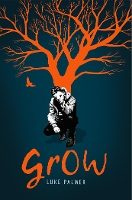
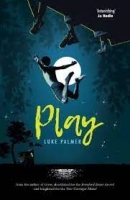
Luke is the author of three acclaimed young adult novels. His debut, Grow, was shortlisted for the Branford Boase Award, while Play was shortlisted for the prestigious Carnegie Medal for Writing. His most recent book, Big Words, "skilfully and sensitively voices the concerns and inner lives of young men of today". Here, Luke shares his thoughts on how to encourage boys to read - and why it is so vital that they do.
Q. How do you connect with young male readers through your books, and what do you think makes your work resonate with teen boys?
A. I think teen boys want to see themselves represented faithfully on the page – with all the unsightly and less savoury bits that they often feel ashamed of or are worried about showing. My characters are far from perfect, but (whether they know it or not) they’re always trying to get better, trying to grow as people, and my books give them a space to do that. I think teenage boys can identify with that.
Q. Why is it important for authors to engage with today’s young men?
A. Because they are brilliant and funny and kind and vulnerable and anxious and determined and confused and joyful and quiet and lacking direction and loud and vivid and confident and driven with purpose and, above everything else, they are valuable.
Q. How can we address the decline in reading among the 11+ age group, particularly with boys?
A. Enthusiastically and with dogged perseverance. I think we need a more societal shift, moving away from the shallow, instant gratification of screens and scrolling and constant connectivity, and towards re-igniting our engagement with deeper, slower ways of being and thinking.
Q. Realistic male protagonists remain relatively rare in YA fiction, yet more authors are recognising the importance of reaching this audience. Could you suggest a few authors who stand out in this area?
A. I started out on William Sutcliffe and Melvin Burgess, and they still stand out to me. But more recently, Nathanael Lessore, Matt Goodfellow, Keith Gray and Brian Conaghan are the tip of an ever-growing iceberg.
Q. How has your experience as a secondary school teacher influenced your novels?
A. Hugely! Young people have such brilliant energy and keep me on my toes constantly. They’re always reinventing themselves and how to communicate. It’s a very creative space to be in! But what’s become increasingly clear is that the things they are most interested in reinventing are the same things that have interested people for millennia. The process of growing up hasn’t really changed all that much!
Q. Your latest novel, Big Words, is written in an accessible style and published by Barrington Stoke, who specialise in books for dyslexic readers. Did you find it challenging to adapt your writing style and condense your story into 120 pages compared to the ~300 pages of Live, Play and Grow?
A. My background is in poetry, so I’m no stranger to brevity, and I loved the challenge of stripping the story of everything that wasn’t necessary to its survival. Avoiding the temptation to dive deep into character’s introspective selves and justifications was definitely difficult, but I hope I’ve left enough space in the book for readers to imagine that for themselves!
 Q. Your first novel, Grow, was published in 2021 - what motivated you to start writing, and what was the inspiration for your debut?
A. I’ve always told stories. In my poetry, which is generally quite language-based and lyric in style, I was finding myself increasingly holding back a narrative impulse that I knew I wanted to explore. The catalyst came back in 2016. I was still teaching while studying for an MA in Creative Writing (focussed on poetry) when a student, talking about the current Brexit debate, told me he was enjoying the anger that all the news coverage was making him feel. That struck me hard – here was a whole generation of young people being fired up by a polarised ‘us vs them’ situation that was working directly against their capacity for empathy. At the time, everyone was talking about radicalisation as a ‘them’ issue, but no one was looking at what was happening to young, white boys who were breathing in this manufactured rage. By that evening, the character of Josh (from Grow) was fully formed in my head and I started to write his story. I finished it alongside my MA. It worries me that our discourse around migration hasn’t moved on at all since then. But I think society’s awareness of the other issues I write about – masculinities and the pressures that patriarchy places on young men and their emotional development – is definitely something we’re making progress with.
Q. My step-son is a little older than the age you write for, but he stopped reading in the early years of secondary school. Before that, he was an avid reader and loved fantasy books. When we talked about it last night, he told me that he lost interest in reading once homework started to demand a lot of it - he began to associate reading with hard work. Is this a pattern you see often, and what advice would you give to other parents facing the same situation?
It is a common pattern, and I could probably talk about this all day and still not have an answer. As an educator, I am very worried about the way that more and more joy seems to be squeezed out of the curriculum every year. There is so much pressure on young people and so little time for play – the natural inquisitiveness that is the absolute core of learning. We need to bring that back into classrooms. I’m also very troubled by how many parents seem to have lost the joy of reading with their children. Recent surveys show they see it as a skill to be learned, rather than a source of pleasure, and often stop doing it in the early years of primary school. So reading only happens at school, and it’s only a vehicle for absorbing information, which is only useful to pass tests and exams. It’s incredibly limiting. Some books are hard work, but if there’s an openness about the outcome, and space to nurture and support that difficulty, then there’s so much pleasure in that work! Books are expansive and mind altering – there’s neurological research to prove it. They help us grow. What we’re not giving young people is any space to grow into. There’s no easy solution to that.
Q. 2026 is the National Year of Reading. Are you involved in any plans or initiatives for the year, and if the campaign could achieve just one thing, what would you hope that would be?
A. I really appreciate that the decline in reading has been recognised by the government, and that the campaign has been set up to address that. My main involvement will continue to be my enthusiastic support of literature within my own classrooms and those schools that I’m privileged to be visiting this year as an author. Like LoveReading4Kids, I see every year as another opportunity to advocate for the joys of reading for pleasure. I understand why the campaign has chosen the ‘Go All In’ approach to ‘meet people where they are’ in terms of reading and the way it can augment what they’re already doing. But, truth be told, my one hope for this focus on reading in 2026 is that people might realise where readers are, and what the view from here is like. Because it’s incredible! The push to giving more young people the space and opportunities to read can only help with this.
Q. Finally, what does LoveReading4Kids mean to you?
A. I’ve been very lucky to have the support of this brilliant organisation since my debut book came out. It means the world that they think my books are worthy of being recommended and placed into the hands of the young people they are written for and I’m truly grateful. Beyond the personal, that there are groups out there advocating for young people’s rights to read high quality and diverse books and are doing the necessary work of getting books into children’s hands and heads fills me with hope for the future.

For more on books for teen boys and accessible texts, browse our related content
Books for children and teens to tackle toxic masculinity and the corrosive impact of the manosphere
Nicola Garrard on her novel, On the Edge
Tia Fisher on Crossing the Line
A Guide for Readers with Dyslexia from Barrington Stoke


Comments (0)
Leave A Reply
You must be logged in to post a comment.