


Most people assume Korean tutoring lessons are only worth pursuing if you're into K-pop or K-dramas. But the real picture is way more interesting. Professionals, heritage speakers, TOPIK test-takers, and serious travelers are all hunting for quality instruction right now. The challenge? Matching your learning style to the right tutor, staying consistent across time zones, and pushing past conversational Korean into grammar and writing. After reviewing dozens of platforms, tools, and tutor networks, this guide breaks down the five best options actually worth your time and money.
Behind the ranking
Every option here was assessed using publicly available information pulled from user review platforms, official product pages, and real learner feedback. Only platforms with a verifiable track record in language learning made the cut. Pricing models, tutor availability, and lesson structure were all factored in.
→ See the full research breakdown
italki - Best for one-on-one personalized Korean lessons with native speakers
Colloquial Audio - Best for audio-based pronunciation and listening practice
LingQ - Best for self-directed learning through authentic Korean content
Busuu - Best for collaborative learning with native speaker feedback
Ba Ba Dum - Best for vocabulary building through game-based practice
The Real Impact of Korean Tutoring Lessons
Picking the wrong platform early wastes months of progress. Korean has a steep learning curve, from Hangul literacy to sentence structure that flips everything an English speaker expects, so the teaching approach genuinely matters.
A tutor whose style clashes with how you absorb information will slow you down, not speed you up. Scheduling inconsistency across time zones makes that worse, because momentum is everything in language learning.
The right platform changes that equation entirely. Well-matched instruction leads to stronger lesson completion and retention rates, faster movement through proficiency levels, and measurable TOPIK score improvements for test-focused learners. That's not a small difference. That's the difference between staying conversational forever and actually getting fluent.
5 Top Picks at a Glance
Note: All data in this table is sourced from review platforms and the official websites of the listed companies.
italki - Best for One-on-One Personalised Korean Lessons

What is italki's Business Model?
italki is a global online language learning platform that connects students directly with native-speaking tutors for live, one-on-one video lessons. Founded in 2007 and based in Hong Kong, they support learning across more than 130 languages with thousands of tutors worldwide. Their Korean tutor network includes both certified professional teachers for structured grammar-focused lessons and community tutors for casual conversation practice. Supplementary tools like writing correction, language partner matching, and discussion forums round out what is genuinely one of the more complete tutor-matching platforms out there.
What Sets italki Apart for Korean Tutoring Lessons?
Students who struggle to find a Korean tutor whose teaching style actually fits their goals will find italki's filtering system genuinely useful. It lets learners sort by teaching approach, lesson type, availability, and price before booking a single session. And honestly, the pay-per-lesson model removes the pressure of long-term commitments, which makes it a smart starting point for anyone testing different tutors before settling on one.
Real User Sentiment:
From what the reviews show, learners consistently praise italki for the human connection that apps simply can't replicate. The flexibility to switch tutors without additional fees is a recurring positive. That said, some users note that lesson quality varies depending on the individual tutor, which is worth factoring in when making your first few bookings.
Colloquial Audio - Best for Audio-Based Pronunciation and Listening Practice

What Is Colloquial Audio's Business Model?
Colloquial Audio is the downloadable audio component of Routledge's well-known Colloquial language learning book series. They offer free MP3 files recorded by native speakers across more than 70 languages, designed to work alongside the printed Colloquial textbooks. For Korean learners, having authentic native speaker audio paired with structured written lessons addresses one of the more common early frustrations: developing accurate pronunciation without a live tutor present.
What Sets Colloquial Audio Apart for Korean Tutoring Lessons?
Learners who rely only on text-based study often develop pronunciation habits that are hard to break later. Colloquial Audio directly addresses that gap by delivering native-recorded audio that mirrors what the textbook is teaching at each stage. The free access model means there's no cost barrier to building strong listening and speaking habits early in the process.
Real User Sentiment:
Review data for Colloquial Audio as a standalone product is limited, since most feedback gets folded into broader reviews of the Colloquial textbook series as a whole. From what readers and learners report, the audio component is considered a solid complement to the books rather than a replacement for live instruction. Users generally treat it as a useful supplement (not a main resource), which is exactly how it's designed to work.
LingQ - Best for Self-Directed Learning Through Authentic Korean Content
What Is LingQ's Business Model?
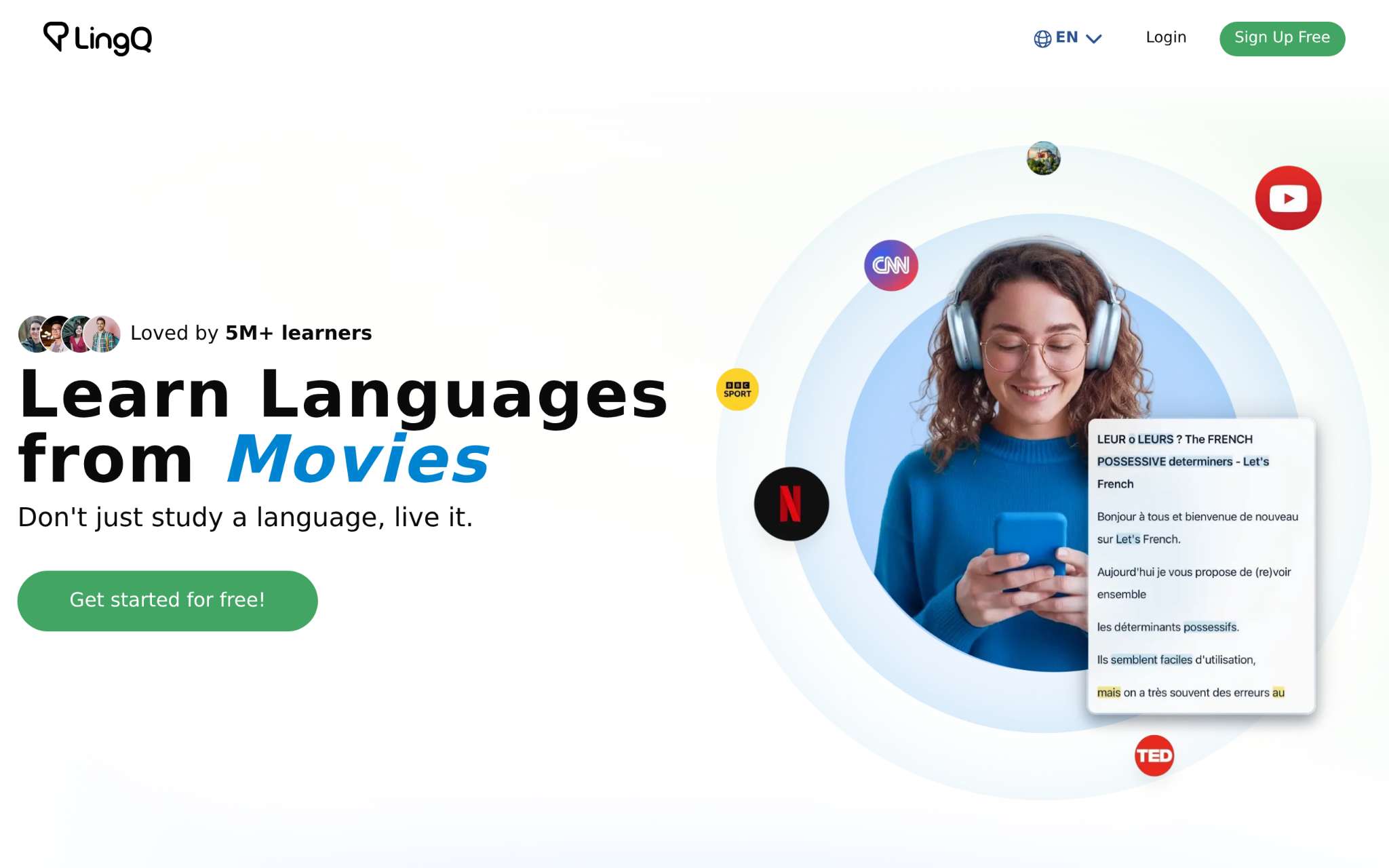
LingQ is an online and mobile language learning platform built around the idea that exposure to real content beats drills and repetition. Founded in 2007 and based in West Vancouver, they support over 50 languages and let learners import podcasts, books, videos, and articles to study from. The platform tracks vocabulary acquisition and allows offline access, making it flexible for learners with busy or irregular schedules. Co-founder Steve Kaufmann speaks 20 languages, and that credibility shows in how the platform is structured.
What Sets LingQ Apart for Korean Tutoring Lessons?
Korean learners who feel stuck at the intermediate plateau often struggle because standard curricula run out of engaging material. LingQ sidesteps that problem by letting users learn directly from content they actually want to consume. That kind of learner-controlled input tends to produce stronger long-term vocabulary retention than rigid lesson formats.
Real User Sentiment:
LingQ was ranked the most effective language app by researchers at Compare Language Apps, and the community response reflects that. Users who stick with it describe meaningful gains in reading and listening comprehension. The platform does have a learning curve for new users (it's not the most intuitive interface at first), but most learners agree the depth of content makes that early friction worth pushing through.
Busuu - Best for Collaborative Learning With Native Speaker Feedback

What Is Busuu's Business Model?
Busuu is a collaborative language learning platform founded in 2008 and headquartered in London. They offer 14 language courses through their website and mobile apps, with both free and premium tiers available. What makes Busuu genuinely different is their peer-to-peer feedback model, where native speakers in the community correct your writing and speaking exercises. They serve over 120 million registered users globally and have partnered with The New York Times and The Economist for real-world content since 2019 (think structured curriculum meets actual journalism).
What Sets Busuu Apart for Korean Tutoring Lessons?
Getting written Korean feedback from actual native speakers, not just an algorithm, fills the gap that most apps leave wide open when it comes to natural phrasing and cultural nuance. That peer correction model mirrors what happens in a real tutoring session, at a fraction of the cost.
Real User Sentiment:
Busuu earned the Language Learning App of the Year in the EdTech Breakthrough Awards 2020, and user reviews echo that recognition. Learners appreciate the structured course path combined with the unpredictability of real native speaker feedback. A small number of users note the Korean content could go further at advanced levels, but for beginner to intermediate learners, the experience is consistently well-rated.
Ba Ba Dum - Best for Vocabulary Building Through Game-Based Practice

What Is Ba Ba Dum's Business Model?
Ba Ba Dum is a free, ad-free vocabulary learning platform created by Polish educational designers Aleksandra and Daniel Mizieliński. Launched in 2014, they teach 1,500 vocabulary words across more than 20 languages using five game formats: image-to-word matching, fill-in-the-blanks, multiple choice, word unscrambling, and written-word matching. The platform has won Awwwards, Adobe Cutting Edge, and dual FWA awards for design, and was nominated for The Webby Awards. That level of design recognition is rare for a free educational tool.
What Sets Ba Ba Dum Apart from Korean Tutoring Lessons?
Vocabulary gaps are one of the most frustrating blockers for Korean learners trying to move past beginner level. Ba Ba Dum's game-based format makes regular vocabulary practice feel less like studying and more like a quick daily habit. The completely free, no-ad model means there's zero friction to opening it for a five-minute session between tutoring lessons.
Real User Sentiment:
User sentiment around Ba Ba Dum leans heavily positive, with learners consistently pointing to the clean design and ease of use as reasons they keep coming back. It wins awards for design for a reason. Most users treat it as a companion tool rather than a full curriculum, and within that role, it delivers well without asking anything in return.
How These Were Chosen and Verified
Gathering Information From Available Sources
The research process started by building a broad list of platforms relevant to Korean language learning. Sources included language learning directories, app review platforms, educator forums, and official product websites. Tutor marketplace listings, curriculum descriptions, and published learner testimonials were all pulled together to create a working longlist. The goal at this stage was breadth: capturing every credible option before any filtering began.
The Shortlisting Pass
Once the longlist was assembled, platforms without verifiable educational track records were removed. This meant checking whether claimed features actually existed on live product pages, cross-referencing user review patterns across multiple platforms, and flagging any option where reviews showed consistent red flags around lesson quality, scheduling reliability, or misleading descriptions. Platforms with thin or unverifiable review histories were excluded regardless of how polished their marketing appeared.
Verification Pass
Each shortlisted option was then cross-checked more carefully. Claims made on official websites were compared against what real learners reported in their reviews. Where a platform claimed a specific teaching approach or feature, the research checked whether actual users confirmed that experience. Platforms that showed a meaningful gap between their stated offering and real-world learner outcomes were either noted with caveats or removed entirely.
Industry Recognition and Authority
Recognition from established education or language learning bodies carries real weight in this evaluation. Platforms that had earned awards, appeared in credible publications, or been cited in independent research were given additional consideration. Busuu's EdTech Breakthrough Award, LingQ's ranking by Compare Language Apps researchers, and Ba Ba Dum's Awwwards and FWA recognition all factored into the final assessment. These signals aren't definitive on their own, but they do point to platforms that have cleared some external bar of quality.
Evidence Specific to Korean Tutoring Lessons
Finally, each platform was assessed for how well it serves Korean learners, not just language learners broadly. This meant looking for dedicated Korean course pages, verified reviews from Korean language students, and evidence that the platform's structure supports the specific challenges of Korean acquisition, including Hangul literacy, TOPIK preparation, and the jump from conversational practice to advanced grammar. Platforms with strong general reputations but no meaningful Korean-specific support were deprioritized in the final ranking.
What to Look For When Choosing Korean Tutoring Lessons
The right Korean tutoring platform depends heavily on where you are in your learning journey and what you're trying to accomplish. Here are the important factors worth evaluating before committing.
Industry/Domain Experience: Look for platforms or tutors with a clear focus on Korean language instruction. General language tutoring experience matters less than familiarity with Hangul, Korean sentence structure, and the specific roadblocks Korean learners face.
Features and Service Options: Consider whether the platform offers live one-on-one lessons, audio supplements, peer feedback, or game-based vocabulary tools. The best option matches your learning style, not just your budget.
Pricing Structure: Pay-per-lesson models offer flexibility, while subscription platforms can reduce cost per session. Neither is universally better, so match the model to how consistently you'll actually show up.
Results Measurement: Good platforms give you a way to track progress, whether that's vocabulary acquisition rate, TOPIK prep progress points, or weekly speaking fluency check-ins.
Industry Knowledge and Compliance: For TOPIK test-takers, check that tutors or course materials line up with TOPIK I and TOPIK II proficiency standards before signing up.
Final Take
Korean tutoring has genuinely expanded beyond introductory classroom lessons, and the platforms available today reflect that range. italki leads for live personalized instruction, while tools like LingQ, Busuu, and Ba Ba Dum fill real gaps in vocabulary, peer feedback, and content immersion. Colloquial Audio handles the pronunciation side without costing a cent. The right combination depends on your goals. Demand for quality Korean instruction will keep growing as Korean culture continues reaching new audiences globally.
Comments (0)
Leave A Reply
You must be logged in to post a comment.