





I picked the perfect time to read Anthony McGowan's Birdlands, camped in a remote part of Yorkshire. I awoke to a dawn chorus like no other and, had I downloaded my bird identification app earlier, I might have been able to name a few of the birds that contributed to that wondrous symphony of song.
Birdlands is a deftly written story of friendship, resilience and the wonder of nature, and reads like a modern fable. With not a wasted word, we follow Beaky, Herman and Pidge, the damaged birds at the centre of this tale. All three are challenged in some way, but as a trio they are stronger together. They can protect, feed and help each other survive in perilous conditions as they journey to Dump, a mythical place of safety and salvation.
Joy Court has written a detailed review of the book, which you can read here, calling it "a truly unforgettable story of survival against the odds, which is brim-full of tragedy and loss, bravery, love and hope, and which has future classic written all over it!"
Anthony McGowan is a Carnegie-winning, critically acclaimed author whose books range from non-fiction for adults (The Art of Failing: Notes from the Underdog) and his extensive series of novellas for Barrington Stoke pitched at dyslexic and struggling readers, to his original and often darkly funny fiction for young adults.
McGowan has a PhD in philosophy, and his philosophical thinking subtly permeates the story, as the birds tell their life stories, dream their dreams, and muse on their existence. He is also a keen birdwatcher and shares this passion and knowledge with his readers, who will learn all sorts of fascinating bird facts, from passive anting to how birds mask their scent to keep safe from predators.
McGowan has said, "I think, taken as a whole, it might be the best thing I've ever written," - and Birdlands is definitely one of our LoveReading4Kids Books of the Year. We were thrilled to have the opportunity to ask him a bit more about his new novel and his writing.
Q. You do not shy away from depicting the brutality of animals hunting one another - the pleasure the goshawk feels as she swoops down to catch the pigeon in mid-flight, or the fledgling chicks consuming prey that is still alive. Do you think it is important to show nature as red in tooth and claw, despite the fact that such scenes may be distressing or traumatic for young readers?
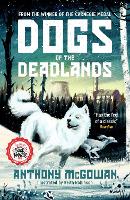
A. I was trying to do something quite complex – indeed, quite contradictory – in Birdlands. Beaky, Pidge and Herman talk, bicker, think and act in some quite human ways (and I’m aware the next question is about anthropomorphism…), which made me want to balance that with as much truth-to-nature as I could squeeze in. Hence my realistic portrayal of the dangers and occasional brutality of the natural world. It’s something I did in my last book for Oneworld – Dogs of the Deadlands. And this does emerge from my own lifelong study of nature. When we sanitise nature we do it a disservice.
But, with my novelist hat on, that danger and brutality of nature also offer the chance to simply make your plots more urgent and exciting. My birds – like all wild animals – daily face terrible trials and gruelling experiences which, thank heavens, most children (other than those caught up in conflicts) generally don’t. That danger infuses your story with excitement.
Can this be distressing or traumatic for young readers? Strangely, I’ve found adults more upset by the bad things that happen in my books than children. But, yes, it’s possible. But I’d rather see it as a positive thing: the role of fiction is to encourage entering the minds of others, to feel and suffer with them. Novels are empathy engines.
Q. Anthropormorphism has a long and distinguished history in literature - especially for children - why do you think that is?
A. It’s true – going back to Aesop in the western tradition, and almost every culture has folk tales where animals have human characteristics. I think this is part of our human ability to project and imagine. It’s almost impossible not to give human feelings and emotions to animals – or even to inanimate objects. When that’s combined with the warmth and sympathy we feel for animals – especially, I suppose, the cute ones, or those which have some resemblance to people (penguins!) – you have something very powerful. As a child I loved animal stories. Some, such as Watership Down, represent animals as very human. Others, such as Call of the Wild, try to be more naturalistic. I loved both schools!
Q. Having previously written about the corvid family in Rook, part of The Truth of Things series, what is it about corvids that you admire and find so fascinating? Was Birdlands in some part connected or inspired by the storyline in Rook when Nicky saves a scruffy rook from being attacked?
A. I hadn’t actually thought about the obvious link to Rook, so I don’t think having a crow and a jackdaw in Birdlands was a deliberate nod to the earlier book. The origins of the story are actually in a real event. I was on a train waiting at an end of the line station in rural Scotland. The station was mobbed with crows, jackdaws and pigeons. I noticed three birds much like Beaky, Pidge and Herman and, just like Jordie in Birdlands, I tried to feed them with scraps of my sandwich. But the stronger birds all beat them to it. It was heartbreaking. And then I imagined them talking to each other, like characters in a Samuel Beckett play. Originally I named them Toto, Stump and Herman. I wrote about this whole thing at the time in a Facebook post (it was probably a decade ago), and the idea lodged in my mind. Later on I thought about the journey to the mythical Dump, and from there the book wrote itself.
But, yes, corvids are among the most intelligent non-human animals, with a range of complex behaviours – including tool using and advanced planning and, fascinatingly, play, that makes them seem strangely close to us. (There’s a wonderful YouTube video of crows repeatedly sliding down a snowy roof in Russia – it’s impossible to see it as anything other than them having fun.) But they’re also efficient predators and crows, in particular, have something ominous and dangerous about them, which I also wanted to personify in Herman.
Q. Pidge, Beaky or Herman each have quite distinct personalities. Which of the three did you most identify with? Were their characteristics based upon humans or animals that you know?
A. Beaky is the main point-of-view character, and I always thought about it as his story first and foremost. (In that origin story, Toto was the jackdaw, and Toto was my childhood family name.) In a way he’s the child, and Pidge and Herman the mother and father figures. Like all my characters, the birds take some aspects from real people, but then I mix them up and add completely new elements. And they evolved and changed throughout the writing process. Pidge was originally more ditsy, and I wanted to make both her character and her storyline more gritty and real and give her more agency. And I always knew Herman would turn out to be a softy in the end. His language to the others, particularly Beaky, changes as their journey progresses, until at the end he’s very much the loving father Beaky needed.
The most obvious ‘real’ character in the book is Old Tam, the homeless person. I got quite emotional about his (spoiler alert!) death. He’s closely based on an old guy who sleeps in our street. We keep trying to find him shelter, but he always escapes and returns to the street. I try to remember to bring him out a cup of tea and a sandwich on a cold night. I’ve given him my old clothes, but he always dismissively rejects them.
Q. Alongside the story of three forlorn birds, Birdlands also tells a deeper story about the power of hope, the importance of the journey, and how faith can sustain us through difficult times. The Dump - with its angels, promise of salvation, and sense of paradise - can be read as an allegory for heaven. In that sense, Birdlands is not just a book for children, it is a fable for all ages. Do you have a reader in mind when you write? Do you hope your books initially marketed for children will also find an audience with adult readers?
A. I think with this book I hoped parents would read it to children, and they’d both get something from it. And, of course, I know school and youth librarians are the greatest, most passionate and expert readers of children’s books, so perhaps I do sometimes think of them, too, as I write! A lot of my early books were insane comedies, and there I would think about the reader constantly, wondering if I was making them laugh. But with Birdlands I was just trying to write the best book I could, and I think I knew I had something with a big emotional punch on my hands.
There are, in a way, three heavens, or three different ideas of heaven, in Birdlands. There’s the false one, the Dump, which turns out to be a kind of hell. Then there’s the family Beaky finds, the humans who love him and care for him. Then there’s the ‘real’ heaven of the end, when he’s reunited with Herman and Pidge. I cried a bit when I wrote that, and I’m a bitter, cynical old so-and-so.
Q. When you write about the natural environment is it always the Yorkshire of your childhood?
A. Often! I was brought up in a small town/big village called Sherburn in Elmet. It was a nondescript sort of place, with four pubs and a church and three housing estates, and little else. But the fields and woods were only a short bike ride away. So nature was both ‘the other’, the thing that wasn’t my everyday life, and yet close enough to be graspable. It’s the landscape of the Nicky and Kenny books. And The Beck is about a ribbon of countryside that flows through the scruffy outskirts of Leeds, where I went to school. But then I’ve also written about the landscape around Chernobyl, and set books in the wilds of Canada and the islands of the South Pacific…
Q. Throughout the story the three flightless birds are very vulnerable to attack, and at points are preyed upon by a hawk, a stoat and a fox. They are also targeted by cats and dogs - neither of which are hunting for food and will just relish the kill. Do you view wildlife predation differently? Does death by cat, which is particularly gruesome for the victim, carry a different moral or emotional weight than one inflicted by a predator hunting to survive?
A. That’s a good question. Domestic cats kill literally millions of birds in the UK every year. But they don’t do it because they’re evil – they do it because that’s their instinct. So I don’t blame cats. I do wish people would put bells on them, though, to give the birds a chance. What I sometimes feel guilty about is ‘demonising’ certain animals in my books, the ones who play the part of the ‘baddies’. In Birdlands, the wild bad guys are a goshawk and a stoat and the fox. These are only ‘bad’ from the point of view of their prey. Just as with the other animals, there’s no real malice, it’s just nature doing its thing. But they appear malign because we’re on the side of Beaky, Herman and Pidge. In my mind it’s linked to how I portray bullies in my ‘human’ books. From the point of view of their victims, bullies are hateful, monstrous, cruel. And that’s how I thought of them when I was at school. But as an adult, I know they’ve usually had their own trials, and their behaviour comes from their experience of violence. But a good baddie really helps a book!

Q. Keith Robinson's illustrations are superb. The double spread of the birds bravely facing the raging dog is particularly striking, and the depiction of Pidge finally taking to the skies makes the reader's heart soar. How did you work with the artist? Did you request illustrations for particular moments in the story or was that Keith’s decision?
I love Keith’s work so much – both on Birdlands and Dogs of the Deadlands. I think the decision of which scenes to illustrate was made in the course of discussions between Katie, my editor, and Keith. My role was to cast an eye over the roughs. I’m happy with this essentially passive role, as I’m a word person, not a picture person, and I’d rather leave it to the experts. But the illustrations are so important in a book like this. I loved encountering illustration in books as a young reader, and love them still. When you read to a child, and turn the page to find a beautiful picture, you sense the child suddenly focus in a new way. And I know it’s a bit of a cliché, but I truly believe we’re living in a golden age of book illustration, with so much exquisite work.

Q. Wildlife features strongly in much of your work. What can animal stories teach us about human nature?
A. Hmmmm … I don’t actually think that much. Clearly, we are animals, and are partly driven by instincts which evolved hundreds of thousands of years ago. But we also have reason, and can overrule those natural drives. And being a good person often involves doing exactly that, in deciding that the thing we want is harmful, and choosing a different path. Also, I said earlier that we should never blame animals for the harm they do, but we can blame humans – if we truly are free – for the terrible things we do to each other and the planet. I’d rather focus that blame on the big corporations and industries which pollute and despoil our beautiful world, and the politicians who enable them. But there’s also personal responsibility. The smaller the footprint we leave on the planet, the better.
Q. Your dedication at the start of the book reads,
"To the slender billed curlew with sorrow,
and the Eskimo curlew with hope."
In 2025 the Slender-billed Curlew, a migratory bird that had once been widespread, was officially declared extinct. What can be done to help protect vulnerable species? Are you personally involved with conservation? What practical steps can ordinary people take from their homes and gardens to make a positive difference for wildlife?
I’m afraid there’s a good chance that the Eskimo curlew has joined the slender billed in extinction, but there’s still hope… As a small child, I remember watching a rather beautiful animated film called Last of the Curlews about the Eskimo Curlew. It hugely moved me, and definitely had a big influence on my work. As for what we can do to help, well there are small things. If you have a garden, you can grow the kinds of plants that encourage wildlife. Everything begins with the invertebrates: if you have a garden humming with insect life, the birds and mammals will follow. You can join organisations like the RSPB or Friends of the Earth which campaign for environmental causes. You can argue, debate, demonstrate, and try to create a culture which understands that our fate is wrapped up with the fate of the natural world. I try to do all that. I fail. But, to go back to Samuel Beckett: "Ever tried. Ever failed. No matter. Try again. Fail again. Fail better."
Q. I recently walked the Dales Way, and although I didn't spot a curlew, we were very excited when the Merlin app picked up their trill cry! With technology playing an increasing role in birdwatching, do you use any of the new apps that identify birds by their songs and calls?
A. I love Merlin! I’m pretty good at visual identification, but birdsong always baffles me. I’ll get very excited by some elaborate new song I hear on a walk, but then it always turns out to be a robin! Except recently, in a churchyard near my home in North London, I heard something unfamiliar. I fired up Merlin and it identified it as a black redstart, one of the rarest breeding birds in the UK. And a bit of research showed that there was a small population in North London. However, what I’d really like is a good pair of stabilised binoculars – the ones I use cost £5 from my local Oxfam shop!
Q. Birdwatching is reportedly the second fastest-growing hobby among Gen Z, as young people embrace analogue hobbies, discovering the benefits of connecting with nature. They also enjoy the gamification of adding birds to their spotted-list. Any advice for young people new to birdwatching?
A. Birdwatchers have always been obsessed with adding birds to their lists, but I’m not sure that’s the best way to think about it. I actually think birdwatching should just be one of the pleasures of exploring the natural world. Trees and plants can be just as fascinating.… OK, not quite as fascinating, but still interesting. And just being out amid the trees and fields is glorious. And the more you do it, the more you see. Each new bit of knowledge opens up new vistas, new experiences. We mentioned technology earlier, and I think despite my love of Merlin, in an ideal world we’d leave our screens behind and just use our senses, bathing in the sights sounds and smells. But in truth, it’s all good, and if the kids want to build excitement and friendships though sharing their ornithological discoveries online, then great.
Q. What is the rarest bird you’ve seen - or your most exciting spot? And is there a species you would love to see or hear?
A. Oh, I slightly gave that away earlier, though I never actually saw the black redstart, just heard it. I’ve seen ospreys and marsh harriers, golden eagles, a great northern diver. But it can be the commoner birds that you love. Many of my greatest moments have come when I saw in real life a bird I’d only seen in pictures in my childhood Ladybird books before. Seeing a green woodpecker, flying heavily as if it’s just eaten a load of pie and chips, always brings me joy. And long-tailed tits are ludicrously cute. And how beautiful is a goldfinch? One bird I’ve never seen but would love to is a bullfinch. They’re not especially uncommon, and with that absurd red breast you’d think they’d be easy to see, but they’re shy skulkers. Anyway, fingers crossed!
Q. At 194 pages Birdlands is a compact novel, rich in storytelling without a word wasted. Your novels for Barrington Stoke are equally perfectly packaged powerful short novels. Do you enjoy writing novellas and shorter novels? Do you have any favourite novellas you would like to suggest to our readers?
A. I’d never thought of writing a novella before I worked with Barrington Stoke, and I definitely had to change my style, becoming more concentrated and focussed, which almost certainly turned me into a better writer. More importantly, shorter novels can be great for reluctant readers. There’s a huge satisfaction to be had in just finishing a book, and shorter novels put that joy more in reach for struggling readers, meaning that they can get into a positive feedback loop.
Katya Balen, Phil Earle and Keith Gray have all written brilliant books for Barrington Stoke. However, two novellas that really moved me when I was younger were The Old Man and the Sea by Ernest Hemingway, which is a nature book, in a way, about the struggles of an old Cuban fisherman to bring in a magnificent marlin he’s caught. It’s both exciting and moving, tragic and uplifting. And then there’s Of Mice and Men by John Steinbeck. In some ways my Nicky and Kenny books are my tribute to Steinbeck’s masterpiece.
Q. As wry the humour is in Birdlands (the bird banter is very funny), as a follower of your social media channels your observational commentry often has me howling. Any plans to return to the anarchic hilarity and absurdity of your early novels for teens, like Hellbent and Henry Tumour?
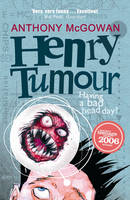
A. I’d love to! One problem is that I’m getting further and further away from my own teenage years, so it’s harder to recreate that teen energy – weirdly I’ve found it easier to write for slightly younger children. I’m proud of all my books (well, not quite all -Hamster Rampage is pretty terrible!), but those early insane, rude comedies – Hellbent, Henry Tumour and Hello Darkness are, I think, genuinely unique – there’s nothing else like them. Can I do it again? Well, I can try …
Q. Were you a keen reader when you were younger? Who were your favourite authors? Any books from your childhood you would like to recommend?
A Reading was a massive part of my childhood. As a young child, apart from comics, I mainly read non-fiction – I was obsessed with nature and war, and read everything in the school book corner and then the local library in my village. To this day, about half of what’s in my head comes from The Guinness Book of Animal Facts and Feats. And, to my shame, I could still tell you the name of every aircraft that fought in WW2. Then when I was 9 (I think), a teacher gave me The Lord of the Rings, which changed my life. It took me years to finish it, but then I read it over and over again. And from then on, I was a different kind of kid – one who read books like that, and might one day write them. I’ve already mentioned some of my favourite books, but back then I would read pretty much anything I could find. I adored the historical novels of Rosemary Sutcliff and Alfred Duggan (and, a bit later, Mary Renault and Dorothy Dunnett), I loved Jack London, I loved science fiction and horror – Stephen King was one of the first adult authors I read. Not all books are equally great; becoming a reader involves occasionally encountering a dud, and working out why you don’t like it. It’s one of the reasons reading is never a wasted activity. We’ve all sat through something on the telly, and at the end thought, well, that was a waste of time. But reading always (or almost always) leaves your mind expanded, your universe a little bigger.
Q. 2026 is the National Year of Reading. Are you involved in any plans or initiatives for the year? If the campaign could achieve just one thing, what would you hope that would be?
A. I’ve been offering schools free sessions and generally been enthusing on social media. So, for example, I’m doing three days of free events in North Lincolnshire at the end of the month, which includes a National Year of Reading ‘Big Lunch’ on 30th June. And, if anyone wants rope me in for anything else, I’m ready and willing.
One thing I’m very proud of is helping to get a serious investment in a major school library project, funded by the literary charity, the Charlotte Aitken Trust. I went to a brain-storming meeting with the trust, and managed to persuade them that school libraries – and, more importantly – librarians – were a brilliant way of enhancing literacy and boosting reading at the grassroots. I couldn’t quite believe it when it all happened as planned. There’s more about it, here.
As for the campaign, I’m not a huge fan of ‘just one thing’ thinking. There are myriad small ways we can make reading more enjoyable, more rewarding, more accessible. But, OK, if I’m pushed into a corner, getting parents to read to kids is crucial. It helps the children, and it helps the parents. Everyone wins. So if we can get parents carers to read a few more bedtime stories, the world will be a better place.
Q. What does LoveReading4Kids mean to you?
A. Children’s books get a very cursory treatment in the newspapers – there might be a roundup in one weekend paper, a brief review in another. So, what LoveReading4Kids mainly means to me is a site where children’s books are treated seriously, where experts and enthusiasts review books at good length. I’ve had some of the most insightful and generous reviews of my own books from LoveReading, but also used it to get an idea of what’s happening in the sector, who’s new, who’s hot. It’s a genuinely great source of information and inspiration.
If like me you've enjoyed brushing up on your bird knowledge recently, you'll find a flock of brilliant bird books in our collection Get Spotting: Best Children's Books for Kids Who Love Birdwatching.
And if you're up in the north over the summer, I can highly recommend the new exhibition at Rheged, The Brilliance of Birds.
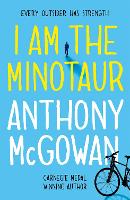
Browse a selection of Anthony McGowan's books below. Click on a jacket to download an extract, buy or read our expert reviews.


Comments (0)
Leave A Reply
You must be logged in to post a comment.