


While it’s hard to believe twenty years have passed since Andy Stanton’s gloriously surreal Mr Gum first blasted his way onto bookshelves, it isn’t hard to believe that the series has stood the test of time, and feels fresh as it ever did.
Taking its madcap cue from influences as diverse as Monty Python, The Young Ones, The Simpsons and Charles Dickens, the writing, stories and Lamonic Bibber story world also conjure Spike Milligan, thanks to the author’s brilliant wordplay, heightened sense of absurdity, and habit of taking tangential plot twists that somehow wind up making some kind of sense. And all this driven by a nine-year-old “girl worth liking”. Namely, Polly, who, provides a formidable foil to grimy and “absolutely grimsters” Mr Gum.
Through the chaos, there’s a keen sense of kindness, and a constant commitment to doing things different — with design, with style, and with structure.
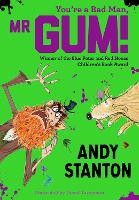
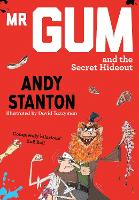
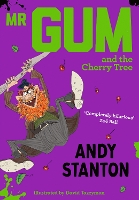
2026 sees the 20th anniversary of the Mr Gum series, with the full series of 9 books reissued in special new editions featuring David Tazzyman's original illustrations, and repackaged with bold and striking new jackets.
"Amazing, funny, great, awesome and I loved reading it!" Lyla Cook
The LoveReading4Kids Kids Reader Panel have given the first in the series, You're a Bad Man, Mr Gum, Five Stars. Published with an introduction by bestselling author Phil Earle, it also includes bonus “never-before-seen material”. And as part of the anniversary celebration there are new audio editions of all the Mr Gum titles, the ninth of which, Mr Gum in The Hound of Lamonic Bibber will be available in audio format for the first time.
"I really liked the extra bonus material for the 20th anniversary edition, especially seeing the original illustrations for the book and the original ending because they made me laugh." Abi Hart
So far the series has sold over four million copies, has won multiple awards and is about to win a brand new generation of fans.
Andy Stanton joined us to share the story behind his much-loved series, and why he believes its popularity has stood the test of time.
Q. When did you know you’d created something that really resonated with kids? Perhaps some notable early reader response, reviews, or awards?
A. Three days before the publication of You’re a Bad Man, Mr Gum! I phoned my editor, Leah Thaxton, in a panic. I told her I was convinced we’d failed and that nothing much would happen with the book. She, being infinitely more experienced and wiser, told me she thought otherwise and that the initial response from bookshops and buyers was really positive. Then, shortly after publication, I met Michael Morpurgo for the first time and he complimented me on how well my book was doing – he’d heard great things and wished me well. It was all a bit surreal and removed from reality. It wasn’t until I started doing events at schools and book festivals that I truly understood the book was connecting with kids. Having a child know and believe in your characters is a wonderful feeling. It tells me that my books are just as real to my readers as all the books I hold dear are to me.
Q. One of the most striking elements of Mr Gum is the way you play with words, create new words, and mash-up language to infuse words with extra meaning. Did you have that impulse and talent from childhood? What were your favourite books as a child?
A. Yes, I’ve been playing with language for as long as I remember. I just can’t sit still with words, I like to look for games to play with them all the time. We had to make a mock newspaper front page at primary school and mine was called The Yliad Rats, which if you read it backwards you can see where I got my idea... I still love that made-up word, ‘Yliad’, which I hear as ‘Yer-lie-ad’ in my head. I also loved rhyming and would frequently turn homework assignments into excuses to write silly songs – something that persisted into Mr Gum and beyond. A key book that opened all this up was The Cat in the Hat – I remember coming across it in the classroom when I was maybe five years old and being knocked out by how anarchic, freewheeling and onomatopoeic it was. Of course, I didn’t know those adjectives at the time, but it hit me hard, it seemed very exciting that you could play with words in that way. Another book I loved for its anarchic language and ideas was The Twits, but my all-time favourite kids’ book is The Eighteenth Emergency by Betsy Byars. I love how she takes a very small, emotional story – one young boy’s fears about the school bully – and spins it into an incredibly involving, funny and melancholy tale. I overidentified with the book’s hero, Mouse, a lot. Heart and emotion are at the root of any good story, I think: underneath all the silliness of Mr Gum you’ll find those things in abundance, or at least I hope you will.
Q. Staying on the subject of language, do you have a favourite descriptive detail from Mr Gum? For example, your description of Jake the dog as being “a furry wobbler and friendly as toast” in the very first book is very memorable, and brilliantly apt!
A. I’ve got a few turns of phrase I’m very pleased with but my all-time favourite moment is when we first meet my heroine, Polly:
She was nine years old, with lovely sandy hair like a cat’s daydream and a smile as happy as the Bank of England. And when she laughed the sunlight went splashing off her pretty teeth like diamonds in search of adventure.
Q. Can you pinpoint why the Mr Gum characters and story world have chimed with so many kids around the world, not just in the UK? And how did your translators tackle all the wordplay and names?
A. I think it goes back to what I was saying earlier: there’s heart and emotional truth beneath the surface. It’s very easy to just write nonsense upon nonsense upon nonsense all day but that’s ultimately an empty endeavour - who cares? You have to write characters your readers will get invested in, with real emotional stakes and dire consequences should the baddies not be stopped. As for the foreign editions, I haven’t got much of an idea as I’m pretty terrible at languages other than my native tongue. I’ve got a large collection of copies of Mr Gum from all over the world which I can’t ever hope to read. That said, I usually do a quick litmus test by turning to the chapter where Polly’s full name (thirty or so nonsense syllables beginning ‘Jammy Grammy Lammy F’Huppa F’Huppa Berlin’) appears. If the translator bothered to ‘translate’ Polly’s name into a bunch of nonsense syllables that would sound funny to the ear of their own readership, I figure they’re probably a decent translator.
Q. Talking of names, what is the story behind the name “Lamonic Bibber”? And which residents did you most enjoy writing about?
A. Long before I wrote the first Mr Gum book, I used to describe anything rubbish as ‘lamonic bibber’. So I’d come out the cinema saying, ‘that film was a load of lamonic bibber’. Or a bad meal was ‘absolute lamonic bibber’. Years later, when it came time to name the town in which the books took place, I remembered the phrase and thought it was perfect: it’s my secret way of reminding myself that everything that happens in the books is a load of old rubbish. My favourite characters to write about are probably Friday O’Leary, as he’s a chaos machine, and Billy William the Third, the disgusting butcher and Mr Gum’s only friend. Polly’s my favourite character – but Billy’s the one who makes me laugh the most.
Q. What’s the best, strangest or most memorable thing that’s happened at a Mr Gum event?
A. Honestly, too many things to recall – I’ve been doing this for twenty years, after all. Performing is intense, you’re in a different headspace from normal life and the most amazing things can happen during a performance which you can’t even remember two days later. Maybe the time a fan gave me a vet’s bill (already paid, thankfully) for their cats who were named after my characters. The names were printed out on the receipt so that was pretty odd to see. Or once I was given a cake made with eggs laid by chickens called Mr Gum and Billy William the Third. Or... No, I forget, seriously too many bizarre and hilarious moments that seemed incredible at the time but have faded into dust. I will give you my all-time favourite question from a child though: ‘Are you a balloon?’
With thanks to Andy Stanton - and congratulations on 20 entertaining years inspiring children to keep reading.




Comments (0)
Leave A Reply
You must be logged in to post a comment.