

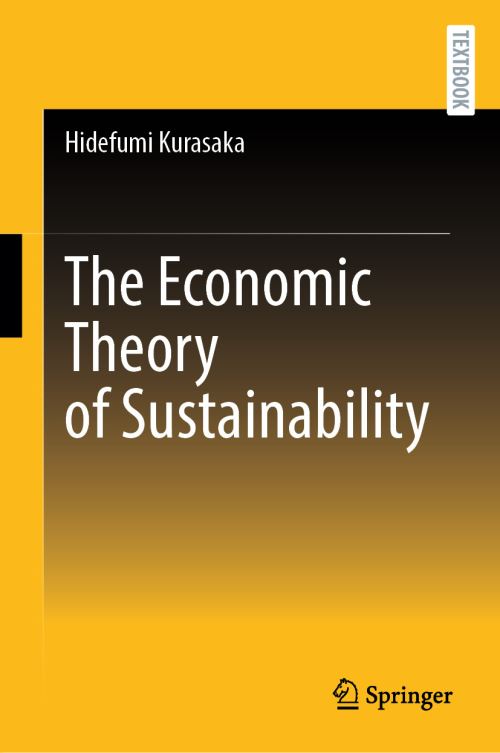
This book constructs an economic theory focused on the material foundations of economic activity, providing a basis for economic policies to achieve sustainable development. In this economic theory, inputs that undergo physical transformation once used are termed "throughput resources," while inputs that remain physically intact after use are called the "capital base." Using a two-stage production function-one stage determining physical quantities and the other determining the amount of value added-it demonstrates the theoretical possibility that even economic agents aiming for profit maximization or utility maximization can achieve economic activities where greater value added is realized with fewer throughput resources inputs. It then points out that to elicit such economic activities, certain price groups must be determined outside the market and examines the rationale for goal setting outside the market grounded in capability theory. This book provides a theoretical foundation for policies aimed at dematerialization and decarbonization.
| ISBN: | 9789819202690 |
| Publication date: | 4th June 2026 |
| Author: | Hidefumi Kurasaka |
| Publisher: | Springer an imprint of Springer Nature Singapore |
| Format: | Hardback |
| Pagination: | 165 pages |
This book constructs an economic theory focused on the material foundations of economic activity, providing a basis for economic policies to achieve sustainable development. It then points out that to elicit such economic activities, certain price groups must be determined outside the market and examines the rationale for goal setting outside the market grounded in capability theory.
Hardback. £58.49, down from the £64.99 cover price. Not Available.
The Economic Theory of Sustainability was written by Hidefumi Kurasaka and published by Springer an imprint of Springer Nature Singapore
The Economic Theory of Sustainability has 165 pages
£58.49, reduced from £64.99. Not Available.