






In an outcomes-driven education system, story can easily be treated as something to squeeze in once the measurable work, or “real learning”, has been done. That assumption deserves closer attention. Bruner’s seminal work on narrative reminds us that human beings use stories to organise experience, construct meaning and imagine possibility (Bruner, 1986, 1990). For children, stories crucially help them begin to make sense of themselves, others and the wider world.
Children reading stories in school is often associated with skills development including fluency, vocabulary and comprehension. These skills are important, of course. The Reading Framework places strong emphasis on reading fluency, language development, vocabulary and comprehension, while also recognising the importance of pupils developing a love of reading and being motivated to read widely (Department for Education, 2023).
Yet, stories also do deeper work. They invite children into awe, wonder, reflection and meaning-making, all of which connect closely with spiritual development and with thoughtful, inclusive Religious Education. When children become absorbed in a narrative, they encounter emotions, moral choices, uncertainty, difference and possibility. Through story, they can explore perspectives safely. They can wonder what they might do, feel or believe in another person’s place.
Many religious and non-religious traditions use stories to explore wisdom, identity, justice, suffering, hope and belonging. Parables, sacred narratives, myths, poetry, family stories and picture books can all raise questions that resist simple answers. Decades of research has shown that story can support religious education in pedagogically appropriate ways, including through literacy development, empathy, engagement and encounter with differing worldviews (Huth, Brown and Usher, 2021).
Used well, story can help create an RE classroom that is interpretive, dialogic and reflective rather than narrowly instructional. The Religion and Worldviews approach also supports this direction, emphasising the need for pupils to understand how worldviews work in human experience, including their own (Religious Education Council of England and Wales, 2024). Bishop’s influential image of books as mirrors, windows and sliding glass doors is helpful here: stories can reflect children’s own lives, open views onto the lives of others, and invite imaginative entry into different worlds (Bishop, 1990). Moss develops this idea for RE, suggesting that story can support pupils as they encounter religious and non-religious lives and reflect on their own developing worldview (Moss, 2026).
Stories create space for awe and wonder. This may come through the vastness of an imagined world, the beauty of language, the sadness of a character’s loss, or the unresolved tension of an ending. These moments help children pause, notice, question and feel. Berryman’s work on Godly Play treats story, wondering and spiritual reflection as serious forms of children’s meaning-making (Berryman, 1991, 2013). Although Godly Play arises from a particular Christian tradition, its emphasis on wondering, silence, symbolism and response can still prompt useful thinking. For teachers, the temptation can be to move quickly into comprehension tasks, however, sometimes the stronger pedagogical choice is to hold the space: a pause after reading, an open question, or an invitation to return to a phrase or image that stayed with the group.
Stories are meant to be shared, retold, questioned and discussed. When pupils talk about characters’ choices, explain their responses, listen to different interpretations or retell events from another viewpoint, they are developing the language of reflection and empathy. Cremin highlights the importance of book talk and shared reading practices (Cremin et al., 2014) the value of reading aloud, book talk and dialogic discussion as central classroom practices help to move reading beyond isolated skill acquisition and into shared classroom culture.
For schools, the implication is clear. Teachers need opportunities to reflect on their own reader identities, to consider how text choices shape classroom culture, and to practise using stories to support spiritual, moral and ethical reflection. This might include using picture books in RE lessons, planning questions that invite genuine dialogue, or considering how story time can become a communal and reflective practice.
Reading and telling stories offers children the privilege of developing attention, imagination, relationship and meaning. Stories do not always give answers. Often, instead they offer companionship as children learn to sit with uncertainty, encounter difference and experience wonder. Making time for this in the primary classroom supports the development of thoughtful, articulate and spiritually aware learners.
Children’s stories (picture books) that could stir the soul and promote awe and spirituality:
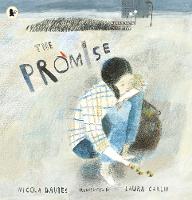
The Promise — Nicola Davies and Laura Carlin
Hope, renewal, environmental responsibility, transformation.
The Island — Armin Greder
Otherness, fear, exclusion, moral responsibility.
The Lost Words — Robert Macfarlane and Jackie Morris
Nature, attentiveness, awe, lament, recovery of language.
The Heart and the Bottle — Oliver Jeffers
Loss, grief, curiosity, emotional and spiritual openness.
The Arrival — Shaun Tan
Migration, displacement, belonging, hospitality.
What Do You Do With an Idea? — Kobi Yamada
Creativity, courage, vocation, hope.
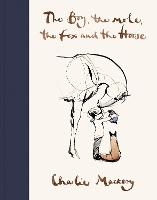
The Boy, the Mole, the Fox and the Horse — Charlie Mackesy
Friendship, kindness, vulnerability, wisdom.
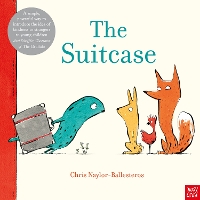
The Suitcase — Chris Naylor-Ballesteros
Refuge, welcome, trust, compassion.
The Proudest Blue — Ibtihaj Muhammad with S. K. Ali, illustrated by Hatem Aly
Islam, hijab, identity, courage, dignity, sibling love.
Hats of Faith — Medeia Cohan and Sarah Walsh
Religious identity, visible signs of faith, respect, freedom of belief.
Zen Shorts — Jon J. Muth
Buddhist thought, stillness, wisdom, perspective, moral reflection.
Lubna and Pebble — Wendy Meddour and Daniel Egnéus
Refuge, friendship, loss, comfort, generosity.
Refuge — Anne Booth and Sam Usher
Nativity, displacement, sanctuary, welcome, compassion.
Riding a Donkey Backwards: Wise and Foolish Tales of Mulla Nasruddin — Sean Taylor and Khayaal Theatre, illustrated by Shirin Adl
Islamic storytelling tradition, humour, wisdom, paradox, humility, questioning, moral reflection.
Here We Are — Oliver Jeffers
Earth, belonging, humility, care, shared humanity.
Practical Classroom Ideas
1. The “linger” question
After reading, avoid immediate comprehension checking. Ask:
Which moment, image or line stayed with you, and why?
2. Character conscience alley
Use a moral dilemma from the story. Pupils form two lines and offer different viewpoints as the character “walks” between them.
3. Awe and wonder pause
Invite pupils to sit silently for 30 seconds after a powerful page, image or ending.
4. RE connection cards
Give pupils cards with prompts such as: hope, belonging, justice, forgiveness, courage, loss, mystery. Ask them to match one to the story and explain their choice.
5. Retell from another worldview
Ask pupils to retell part of the story from another character’s perspective, or from the viewpoint of someone with a different belief, value or experience.
6. Book talk sentence stems
Use stems such as:
• I wonder whether…
• This made me think about…
• I disagree because…
• Another way to interpret this is…
• This connects with…
Browse our Children's & Teenage Religion Books section for more religious stories
References
Berryman, J.W. (1991) Godly Play: A Way of Religious Education. San Francisco: HarperSanFrancisco.
Berryman, J.W. (2013) The Spiritual Guidance of Children: Montessori, Godly Play, and the Future. New York: Morehouse Publishing.
Bishop, R.S. (1990) ‘Mirrors, windows, and sliding glass doors’, Perspectives: Choosing and Using Books for the Classroom, 6(3), pp. ix–xi.
Bruner, J.S. (1986) Actual Minds, Possible Worlds. Cambridge, MA: Harvard University Press.
Bruner, J.S. (1990) Acts of Meaning. Cambridge, MA: Harvard University Press.
Cremin, T., Mottram, M., Collins, F.M., Powell, S. and Safford, K. (2014) Building Communities of Engaged Readers: Reading for Pleasure. London: Routledge.
Department for Education (2023) The Reading Framework: Teaching the Foundations of Literacy. London: Department for Education.
Huth, K., Brown, R. and Usher, W. (2021) ‘The use of story to teach religious education in the early years of primary school: a systematic review of the literature’, Journal of Religious Education, 69, pp. 253–272. doi: 10.1007/s40839-021-00140-y.
Moss, F. (2026) ‘The Power of Story in RE: Windows, Mirrors and Glass Sliding Doors’, RE:Online, 1 March.
Religious Education Council of England and Wales (2024) Developing a Religion and Worldviews Approach in Religious Education in England: A Handbook for Curriculum Writers. London: Religious Education Council of England and Wales.
Safford, K. (2014) ‘A reading for pleasure pedagogy’, in Cremin, T., Mottram, M., Collins, F.M., Powell, S. and Safford, K. (eds.) Building Communities of Engaged Readers: Reading for Pleasure. London: Routledge, pp. 89–107.


Comments (0)
Leave A Reply
You must be logged in to post a comment.