


In the classroom, spiritual development often happens quietly; sometimes in the pause after the final page of a story.
A class has been listening closely. The teacher closes the book. No one speaks immediately. Then a child notices something small: a tiny detail in an illustration, a repeated image, a change in colour, a silence between two characters, a phrase that felt sad, a choice that seemed brave, or an ending that did not quite explain itself. Another child offers a different interpretation. For a few moments, the classroom becomes a place of attention, uncertainty and meaning.
In a busy primary classroom, these moments are easily missed. There is often pressure to move quickly from story into task: retrieve the facts, define the vocaubularly, complete the written response, meet the learning objective. However, stories also invite forms of growth that are harder to measure immediately. They can help children wonder, reflect, empathise, imagine and make meaning — capacities not easily evidenced on a pupil target tracker, but no less vital for the world children are growing into.
To use stories well, we need to understand what makes them so powerful in the first place. Stories allow children to encounter beauty, mystery, loss, courage, belonging, faith, doubt, hope and difference. They do not always tell children what to think. At their best, they invite children to attend, to imagine, to wonder and to return. This makes story one of the richest resources teachers have for nurturing children’s spiritual development within ordinary classroom life.
What do we mean by spiritual development?
Spiritual development can be an awkward phrase in education. For some, it sounds explicitly religious. For others, it feels too broad to be useful. In schools, however, it needs to be understood in a way that is both meaningful and hospitable. It includes, but is not limited to, religious belief.
Hay and Nye’s influential work describes children’s spirituality through the idea of “relational consciousness”: children’s awareness of relationship with the self, with others, with the world and, for some, with God or the transcendent (Hay and Nye, 2006). This is a helpful way of thinking because it avoids reducing spirituality to either formal religion or private feeling; it suggests that spirituality is found in connectedness, attentiveness and depth of response.
Eaude’s work on children’s spiritual, moral, social and cultural development treats spiritual development as part of children’s whole growth, connected with identity, values, imagination, belonging and the ways children make sense of experience (Eaude, 2008). This fits closely with the life of the primary classroom, where children are continually negotiating who they are, how they relate to others, what matters, and how they understand the world around them.
The National Curriculum states that every state-funded school should offer a balanced and broadly based curriculum which promotes pupils’ “spiritual, moral, cultural, mental and physical development” and prepares them for the opportunities, responsibilities and experiences of later life (Department for Education, 2014). Spiritual development, then, is not an optional extra or an inspection add-on. It belongs within the broader purposes of education.
Current Ofsted language gives this a more practical frame, referring to pupils’ ability to reflect on beliefs and perspectives on life, respect different people’s faiths, feelings and values, show fascination in learning about themselves and the world, use imagination and creativity, and reflect on their experiences (Ofsted, 2025).
These descriptions are not a curriculum in themselves, but they help to show why story matters.
Stories and the inner life
Stories give children language for the inner life. A child may know what it is to feel lonely, hopeful, frightened, jealous, brave or ashamed before they can explain those experiences clearly. Stories provide images and words that help children name what they already half-understand (Nikolajeva, 2013). A character’s silence, a repeated phrase, a dark page, a small act of kindness or an unresolved ending can give shape to feelings that might otherwise remain hidden.
This is important because children’s spiritual development is often seen in fragments. It may appear in a question, a drawing, a moment of stillness, a disagreement, or an unexpected comment about fairness, sadness or hope. Story gives children a shared language through which these responses can emerge safely. A child can speak about a character before speaking about themselves. They can wonder about a fictional world while quietly making sense of their own.
Stories also make space for uncertainty. Much of school life is organised around answers: correct spellings, accurate calculations, clear success criteria, evidence of progress. Stories can be different in that they often hold ambiguity, inviting several interpretations. They may leave children wondering whether a character was right, whether forgiveness is possible, whether hope has been restored, or whether a loss can ever be fully healed. This does not make stories vague. It makes them spacious.
A core aspect of children’s spiritual development is the ability to sit with questions that cannot be answered too quickly. What is fair? Why do people suffer? What makes a home? Can people change? What do we do when we are afraid? What might courage look like?
Stories allow children to approach such questions through imagination before they attempt to answer them more directly.
Moral and spiritual rehearsal
Stories also offer children a form of moral and spiritual rehearsal. Through narrative, they can enter difficult, unfamiliar or emotionally complex situations safely, imagining what it might mean to feel, choose, forgive, hope or begin again (D’Olimpio and Peterson, 2018). They can consider choices, consequences and motives without being exposed or judged.
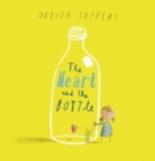
A child can think about welcome through the story of a stranger arriving with a suitcase. They can consider grief through a character who keeps their heart in a bottle. They can explore courage through a child standing visibly and proudly in their religious identity. They can think about belonging through a character who feels strange, rejected or misunderstood. In each case, the story creates distance and closeness at the same time.
This is one reason picturebooks are so powerful in primary classrooms. Their language, image, rhythm and silence can work together to create meaning. A page may say very little but suggest a great deal. An illustration may hold sorrow, humour, fear or hope in ways that words alone cannot. Children are invited to notice, infer and feel their way into meaning.
This does not mean that every emotional response to a story is spiritual development. It means that stories can create conditions in which spiritual development becomes possible. They can help children attend more carefully to themselves, to others and to the world.
Story and Religion and Worldviews Education
Huth, Brown and Usher’s review of story in early years religious education identifies story as pedagogically valuable for engagement, empathy, literacy and encounter with different worldviews (Huth, Brown and Usher, 2021). Stories help children see that beliefs and values are not only abstract ideas. They are lived, remembered, questioned, narrated and embodied.
The developing Religion and Worldviews approach encourages pupils to understand how worldviews work in human experience, including their own (Religious Education Council of England and Wales, 2024). Story is especially well suited to this because worldviews are often carried through narrative. Stories from faith and non-faith traditions, family experience and children’s literature can help pupils see that beliefs and values are not only ideas to be discussed, but ways of living.
A story may show how a festival is experienced by a child, how prayer shapes a family routine, how a community remembers suffering, or how someone acts from a deeply held conviction. Such stories can help children move beyond detached substantive knowledge about religion towards a richer understanding of lived experience.
Bishop’s image of books as mirrors, windows and sliding glass doors remains important here (Bishop, 1990). Some stories reflect children’s own lives and identities. Others open views onto lives and traditions different from their own. Some invite children to step imaginatively into another way of seeing the world. Moss develops this idea for RE, arguing that stories can support pupils as they encounter religious and non-religious lives and reflect on their own developing worldview (Moss, 2026).
This, however, requires care. Stories from religious traditions should not be used merely as interesting moral tales detached from their communities, histories and meanings. Equally, children should not be asked to speak as representatives of a religion, culture or worldview. A Muslim child should not be expected to explain Islam for the class. A Christian child should not be required to disclose family belief or practice. A child from a non-religious family should not be positioned as lacking spirituality.
The teacher’s role is vital: to create informed, respectful encounters, with enough context for the story to be understood, enough openness for pupils to think, and enough structure for dialogue to remain thoughtful.
Stories as part of education’s deeper purpose
So, stories matter. They help children practise forms of attention that are central to spiritual development. They invite children to notice what is beautiful, troubling, strange, unjust or hopeful. They give children language for experiences that may be difficult to name directly. They allow them to encounter other lives and ways of seeing without reducing those lives to information.
This is why story should not be treated as something to squeeze in after the “real learning” has been done. Reading fluency, vocabulary, comprehension and literary knowledge all matter deeply too. Children need to become skilled readers. But they also need reasons to read. They need to know that books can help them wonder, feel, question, imagine, remember and hope.
At the end of a story, the teacher closes the book. The class is quiet. In that pause, something important may be happening. Children may be thinking about a character, but they may also be thinking about themselves. They may be considering another way of living, another kind of courage, another form of hope. They may be noticing beauty, injustice, sadness or mystery. They may be learning that some questions deserve time.
Children’s stories (picture books) that could stir the soul and promote awe and spirituality:
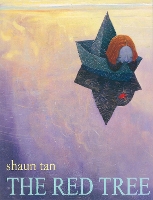
The Red Tree — Shaun Tan— sadness, hope and the inner life
The Heart and the Bottle — Oliver Jeffers— grief, curiosity and reopening the self
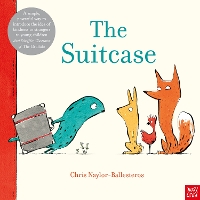
The Suitcase — Chris Naylor-Ballesteros— welcome, suspicion and repair
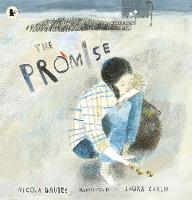
The Promise — Nicola Davies and Laura Carlin— hope, responsibility and transformation
Footpath Flowers — JonArno Lawson and Sydney Smith— noticing, small gestures and wordless kindness
A Stone Sat Still — Brendan Wenzel— perspective, stillness and the more- than-human world
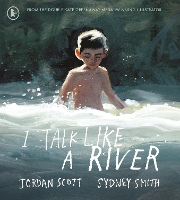
I Talk Like a River — Jordan Scott and Sydney Smith— voice, shame, dignity and self-understanding
My Name is a Gift — Zeshan Akhter and Åsa Gilland — identity, names, self- worth and cultural pride
In My Mosque — M. O. Yuksel and Hatem Aly— lived faith, community and welcome
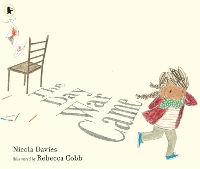
The Day War Came — Nicola Davies and Rebecca Cobb — displacement, justice and making space
Ida, Always — Caron Levis and Charles Santoso — grief, memory and continuing love
Anna Hibiscus’ Song — Atinuke and Lauren Tobia — joy as something that wants to be expressed and shared
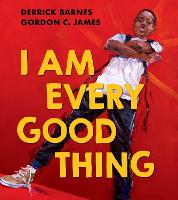
I Am Every Good Thing — Derrick Barnes and Gordon C. James — confidence, dignity, imagination and possibility
General pause prompts
These prompts can be used with many picturebooks. They should be used sparingly; the aim is to invite attention, not to over-question the story.
- What did you notice that someone else might have missed?
- Which image, phrase or moment stayed with you?
- Was there a moment that felt quiet, strange, sad, beautiful or hopeful?
- What question does this story leave behind?
- What remains unexplained?
- Who is welcomed, ignored, misunderstood, changed or seen differently?
- Where do you see courage in this story?
- Where do you see kindness, repair or hope?
- What does this story help us notice about ourselves, others or the world?
- What might this story mean to someone with a different experience, faith or worldview?
- Is there anything here that feels like a mirror, a window or a sliding glass door?
- Is there a moment in this story that deserves a pause?
References
Bishop, R.S. (1990) ‘Mirrors, windows, and sliding glass doors’, Perspectives: Choosing and Using Books for the Classroom, 6(3), pp. ix–xi.
Department for Education (2014) The national curriculum in England: framework for key stages 1 to 4. London: Department for Education.
D’Olimpio, L. and Peterson, A. (2018) ‘The ethics of narrative art: Philosophy in schools, compassion and learning from stories’, Journal of Philosophy in Schools, 5(1), pp. 92–110.
Eaude, T. (2008) Children’s Spiritual, Moral, Social and Cultural Development: Primary and Early Years. 2nd edn. Exeter: Learning Matters.
Hay, D. and Nye, R. (2006) The Spirit of the Child. Revised edn. London: Jessica Kingsley Publishers.
Huth, K., Brown, R. and Usher, W. (2021) ‘The use of story to teach religious education in the early years of primary school: a systematic review of the literature’, Journal of Religious Education, 69(2), pp. 253–272. doi: 10.1007/s40839-021-00140- y.
Moss, F. (2026) ‘The Power of Story in RE: Windows, Mirrors and Glass Sliding Doors’, RE:Online, 1 March.
Nikolajeva, M. (2013) ‘Picturebooks and emotional literacy’, The Reading Teacher, 67(4), pp. 249–254.
Ofsted (2025) State-funded School Inspection Toolkit. London: Ofsted.
Religious Education Council of England and Wales (2024) Developing a Religion and Worldviews Approach in Religious Education in England: A Handbook for Curriculum Writers. London: Religious Education Council of England and Wales.
Comments (0)
Leave A Reply
You must be logged in to post a comment.