

Recently, I completed a race equity training programme with Hemisphere, an organisation dedicated to helping educators see the world differently. To notice gaps in knowledge. Hear stories we may not yet have encountered. Reflect honestly on how racial inequity shows up in everyday school life.
One message came through clearly: awareness matters, but awareness alone is not enough. If schools are serious about equity, we need to move beyond intention and into action. And we need to create environments where all children feel safe, seen and able to learn.
Bias is human. But it’s not harmless
Hemisphere’s work starts from a simple, uncomfortable truth: biases are natural. They are formed through our backgrounds, our experiences and the messages we absorb over time. But when left unchecked, unconscious bias can have serious consequences. Especially for children.
Much of the discrimination seen and experienced in schools is not deliberate. It happens because of a lack of knowledge. Because of deeply embedded assumptions about who a “successful student” looks like. Research shows that, regardless of our own background, many of us have been conditioned to associate success with whiteness (or, in some contexts, Asian middle-class identity), while unconsciously attaching lower expectations to children of Black heritage.
Even when our intent is inclusive, our brains may be working against us.
The work, then, is not about blame. It’s about bringing bias from the subconscious into the conscious, where it can be questioned, disrupted and changed.
Survival brain vs learning brain
One of the most striking insights from the training centred on the idea of survival brain. When children feel unsafe, scrutinised or “othered”, their cognitive resources are diverted away from learning.
Hemisphere shared research showing that:
- Children of Black heritage on Free School Meals often start school ahead of their White and Asian peers, yet by age 16, 35% fewer meet expected attainment goals
- Black pupils are more likely to experience school in ways that push them into survival mode:
- 30% have been told to change their natural hair
- Many report having their names shortened or mispronounced
- 1 in 3 report being disciplined for displaying cultural norms
- Only 29% of Black pupils say their school books feature characters who share their skin colour, compared to 100% of White pupils.
When children feel they are constantly being watched, corrected or misunderstood, curiosity shuts down. Safety unlocks learning - and safety is created by the adults around them.
Microaggressions and the weight of “small” things
Unconscious bias often appears through subtle acts of exclusion, sometimes called microaggressions. These can be verbal, non-verbal or environmental, and are often unintended or even well-meaning.
But their impact is profound.
Being asked repeatedly “Where are you really from?”, having your name mispronounced, being told you’re “too sensitive”, or seeing no one like you represented positively in books - these moments accumulate. This cognitive and emotional load makes learning harder.
Why “not seeing colour” isn’t the answer
Many educators - particularly White educators - feel anxious about addressing race for fear of getting it wrong. But silence comes at a cost. When we claim not to “see colour”, we risk sending the message that difference is uncomfortable or unimportant.
Race and ethnicity are central to many children’s identities. If we don’t see race, we also risk failing to see racism - and racism helps explain why outcomes differ so sharply between groups.
Equity requires us to acknowledge difference, measure outcomes honestly, and act accordingly.
Books as a lever for equity
Reading can’t fix structural inequality on its own - but it can be a powerful lever.
Books:
- Offer mirrors, windows and sliding doors
- Help children see themselves as worthy, capable and belonging
- Help others develop empathy, understanding and respect
- Shape expectations - including teachers’ expectations
As the saying goes: “If you can’t see it, you can’t be it.”
Auditing classroom and library collections is a practical, meaningful starting point:
- Who is visible?
- Who is missing?
- Are characters fully human, or defined by struggle alone?
- Are stories integrated across the curriculum, or confined to specific months?
Book Recommendations to Support Race Equity in Schools
Below is a themed, classroom-ready selection of books that align with the principles explored in the Hemisphere training.
Building Identity, Belonging & Joy (Primary)
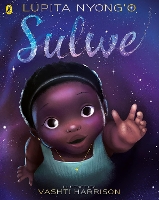
Sulwe by Lupita Nyong’o. A luminous exploration of colourism, self-worth and belonging.
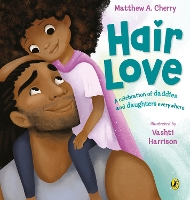
Hair Love by Matthew A Cherry. Celebrates Black hair, family and pride — vital counter-narratives to policing of appearance.
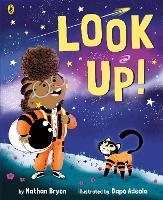
Look Up! by Nathan Bryon. Joyful representation of a curious Black child in the world of science.
Expanding Perspectives & Empathy (KS2 / Lower KS3)
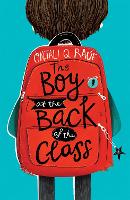
The Boy at the Back of the Class by Onjali Q. Raúf. A powerful story about empathy, voice and standing up to injustice.
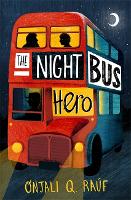
The Night Bus Hero by Onjali Q. Raúf. Explores homelessness, belonging and social responsibility.
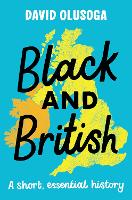
Black and British: A Short, Essential History by David Olusoga. Accessible, essential context for understanding Britain’s racial history.
Identity, Power & Voice (KS3 / KS4)
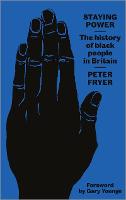
Staying Power by Peter Fryer. A panoramic history on Black Britons stretching back to the Roman conquest
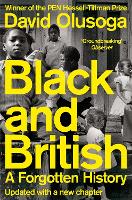
Black & British: A Forgotten History by David Olusoga. A comprehensive and thorough combing through the fine details of a complex history that has been largely watered down and wiped from British memory.
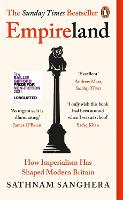
Empireland by Sathnam Sanghera. How Britain’s imperial past continues to influence its culture, society and ideas about race - offering schools a powerful context for understanding modern-day racism and equity in education.
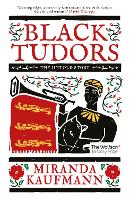
Black Tudors The Untold Story by Miranda Kaufmann. Combining exemplary investigative research with enthralling readability and a radiant human touch, this book will surely transform commonly-held perceptions of sixteenth century England, and the role of minorities in British history.
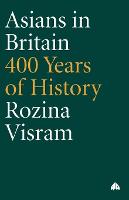
Asians in Britain. A richly detailed, accessible exploration of the history and lived experiences of Asian communities in the UK, giving educators and students essential context for understanding race, identity and multicultural Britain
Professional Reading for Educators on Race Equity
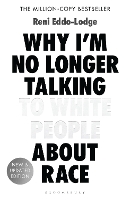
Why I’m No Longer Talking to White People About Race by Reni Eddo-Lodge. A key text for building racial literacy.
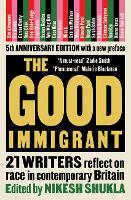
The Good Immigrant edited by Nikesh Shukla. A powerful anthology of first-person essays exploring race, identity and belonging in Britain - illuminating voices too often marginalised in school curricula.
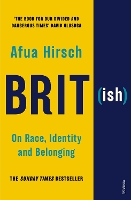
Brit(ish): On Race, Identity and Belonging by Afua Hirsch. A nuanced memoir and cultural critique that helps educators understand lived British racial histories that are frequently absent from classroom teaching.
How to Be an Antiracist by Ibram X. Kendi. A conceptual foundation for moving from non-racist intent to antiracist action - a mindset that leadership teams can model and embed in practice.
Racial literacy is not a one-off training or a single booklist. It is a continuous process of learning, reflection and action.
Reading widely, critically and compassionately helps us notice what we’ve missed and do better.
By creating classrooms where every child can see themselves reflected with dignity and joy, we move closer to an education system where every child can thrive.
For more features on representation in books, browse our content:
Why Representation Matters: Gypsy, Roma and Traveller Voices in Children’s Books
Voice, Agency & Representation: Why Stories Shape Who We Become
Positive, Empowering or Innovative Representation in 2025 Winners Of UKLA Book Awards
‘Life changing’ boost to diversity in GCSE English Literature with Lit in Colour Pioneers Pilot
Pearson's Plotting Ahead: Diversity, inclusion and belonging in children's literature
Diversity & Inclusion - 100+ Children's Books that Celebrate Difference

Comments (0)
Leave A Reply
You must be logged in to post a comment.