





As allegations against bestselling children's author David Walliams prompt booksellers and libraries to remove his books from shelves, schools face a difficult question: what should happen to the books children already know and love?
The question of whether to remove David Walliams' books from school libraries has become increasingly urgent following serious allegations of sexual misconduct against the author.
A joint investigation by The Guardian and ITV News, published on 10th November 2026, reported allegations from several women concerning Walliams' behaviour, including an allegation of sexual assault involving a 15-year-old girl. Walliams has denied being a sexual predator, denied breaking the law and disputed the allegations.
As reported in The Bookseller, the response from the book trade has been swift. HarperCollins had already ended its publishing relationship with Walliams and subsequently stopped publishing his backlist. The Works and TG Jones have removed his books from sale, while Waterstones is arranging to return its remaining stock. LoveReading4Kids has followed suit. Even Alton Towers last week announced the closure of David Walliams World. Camden Council has also confirmed that Walliams' books have been removed from public display in its libraries.
But what does this mean for schools, teachers and librarians?
Removing a book is not necessarily the same as banning it For school librarians, this is far from a straightforward decision.
Walliams has been one of the most commercially successful children's authors of his generation. His books have found their way into classrooms, school libraries and children's bedrooms across the country.
For some children, particularly those who have struggled to find books they enjoy, titles such as Gangsta Granny, Billionaire Boy and Mr Stink have provided an accessible introduction to independent reading.
Does that mean those books should remain on school shelves regardless of concerns about their author?
Or does a school's responsibility to create a safe, inclusive environment mean reconsidering which authors it chooses to stock, promote and celebrate?
And is there an important distinction between removing books from prominent displays, choosing not to purchase further copies and withdrawing existing titles altogether?
These are different decisions, with different implications.
We asked LoveReading4Kids reviewer and award-winning school librarian Lucas Maxwell his take on the matter. He comments: "Walliams' books have been off my radar since I started as a secondary school librarian thirteen years ago. Like many librarians, I felt his books were not only mean-spirited but often sexist, classist, misogynist, homophobic and racist. Considering they weren't popular with our students and that there are thousands of better written alternatives, it was not a difficult decision to weed them out and let them drift into oblivion where they belong."
What are professional library organisations advising?
Following the investigation, Libraries Connected has emphasised the importance of established professional and ethical principles when making decisions about library collections.
As the debate gathers momentum, the Chartered Institute of Library and Information Professionals (CILIP) has issued a timely reminder that decisions about removing books should be grounded in professional ethics, established policies and the needs of library users.
In a statement published on 11th November 2026, CILIP acknowledged how challenging and stressful disputes over library collections can be for the professionals responsible for managing them. Rather than recommending a blanket approach, the organisation has highlighted several resources designed to help librarians navigate difficult decisions. The message is an important one: decisions about books should be considered, consistent and rooted in professional judgement.
For schools, that means looking beyond the immediate headlines and asking whether existing collection policies provide a clear framework for responding to concerns.
It also raises an important question about who makes these decisions. Should responsibility rest with the school librarian, senior leadership team, governors or a combination of these? And what happens when parents, teachers and pupils hold very different views?
Perhaps most importantly, CILIP's guidance reminds us that protecting intellectual freedom and maintaining a safe, inclusive library environment are not necessarily opposing objectives. Both should inform the decision-making process.
For schools feeling under pressure to act quickly, the first step may not be removing books from shelves, but reviewing the policies and principles that should guide that decision.
Can we separate the book from the author?
It's a question that has troubled readers, teachers and librarians for generations.
- Can we appreciate a book while questioning the behaviour of the person who wrote it?
- Should allegations against an author influence whether their books remain available to children?
- And should the answer be different when the author writes specifically for young readers?
There are also questions about the content of the books themselves. Some educators have previously raised concerns about the portrayal of particular characters, stereotypes and the use of humour at others' expense in Walliams' writing.
Those concerns are separate from the current allegations and deserve consideration on their own merits. A school might decide that certain books no longer reflect the values it wishes to promote. Another might conclude that withdrawing existing books would unnecessarily restrict children's reading choices. Neither decision should be taken without careful thought.
What about the children who love these books?
At LoveReading4Schools, we believe that reading for pleasure matters enormously. We know how powerful it can be when a child discovers a book that makes them laugh, captures their imagination or inspires them to pick up another.
We also know that children don't always choose the books adults would choose for them. The freedom to explore, discover and develop personal reading preferences is fundamental to building a lifelong love of reading. But reading for pleasure does not mean every book must remain on every shelf indefinitely.
School libraries are constantly evolving. Books are reviewed, replaced, withdrawn and added to collections as children's needs, interests and understanding change. Perhaps the question is not simply whether David Walliams' books should stay or go, but how schools can approach the decision thoughtfully, transparently and with children's interests at the centre.
Five questions schools might consider
For schools reviewing their collections, it may be helpful to consider:
1. What does our existing library collection policy say?
Decisions should be consistent with established procedures rather than made in isolation.
2. Are we distinguishing between access and promotion?
Choosing not to feature an author in displays or recommended reading lists is different from removing books entirely.
3. Have we considered the views of our school community?
Librarians, teachers, senior leaders, parents and, where appropriate, pupils may offer different perspectives.
4. How does this decision support our safeguarding responsibilities and school values?
The wellbeing of children must remain central.
5. Are we continuing to offer a broad and exciting choice of books?
Whatever decision is reached, children should have access to a rich, diverse collection that reflects their interests and encourages them to read.
An opportunity to discover new authors?
There is another dimension to this conversation. For years, a relatively small number of bestselling authors have dominated children's book sales, school book fairs and library shelves. Meanwhile, countless brilliant children's authors and illustrators struggle to achieve the same visibility.
If schools decide to reconsider their collections, there is an opportunity to introduce children to a wider range of voices, stories and styles of humour. Not because one author needs to be replaced by another, but because children's reading lives are richer when they have genuine choice.
From laugh-out-loud adventures and illustrated fiction to graphic novels and brilliantly silly stories, there is an extraordinary breadth of children's literature waiting to be discovered.
Ultimately, this is about more than one author. The debate surrounding David Walliams raises much wider questions about censorship, professional responsibility, safeguarding, freedom of choice and the role of school libraries.
There may not be one answer that is right for every school. What matters is that decisions are informed, proportionate and grounded in professional judgement, rather than rushed reactions. Above all, we must not lose sight of the children at the heart of the conversation.
Their safety matters. Their voices matter. And their right to discover books that make them want to read matters too.
We'd love to hear from you
Are you reviewing David Walliams' books in your school library? Have you decided to remove them, stop purchasing new copies or leave existing books available?
Who is involved in making that decision, and how are you balancing safeguarding, professional judgement and children's freedom to choose?
We'd love to hear how schools are approaching this complex issue - share in the comments or email us on [email protected]
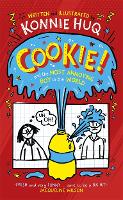
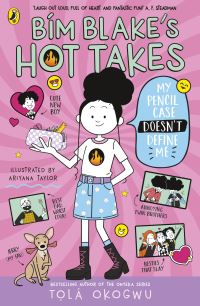
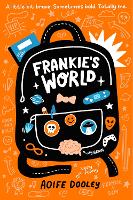
And if you are looking for some alternatives, we recommend this selection of well crafted, extremely funny, warm-hearted books for 7-11 year olds.






Comments (0)
Leave A Reply
You must be logged in to post a comment.